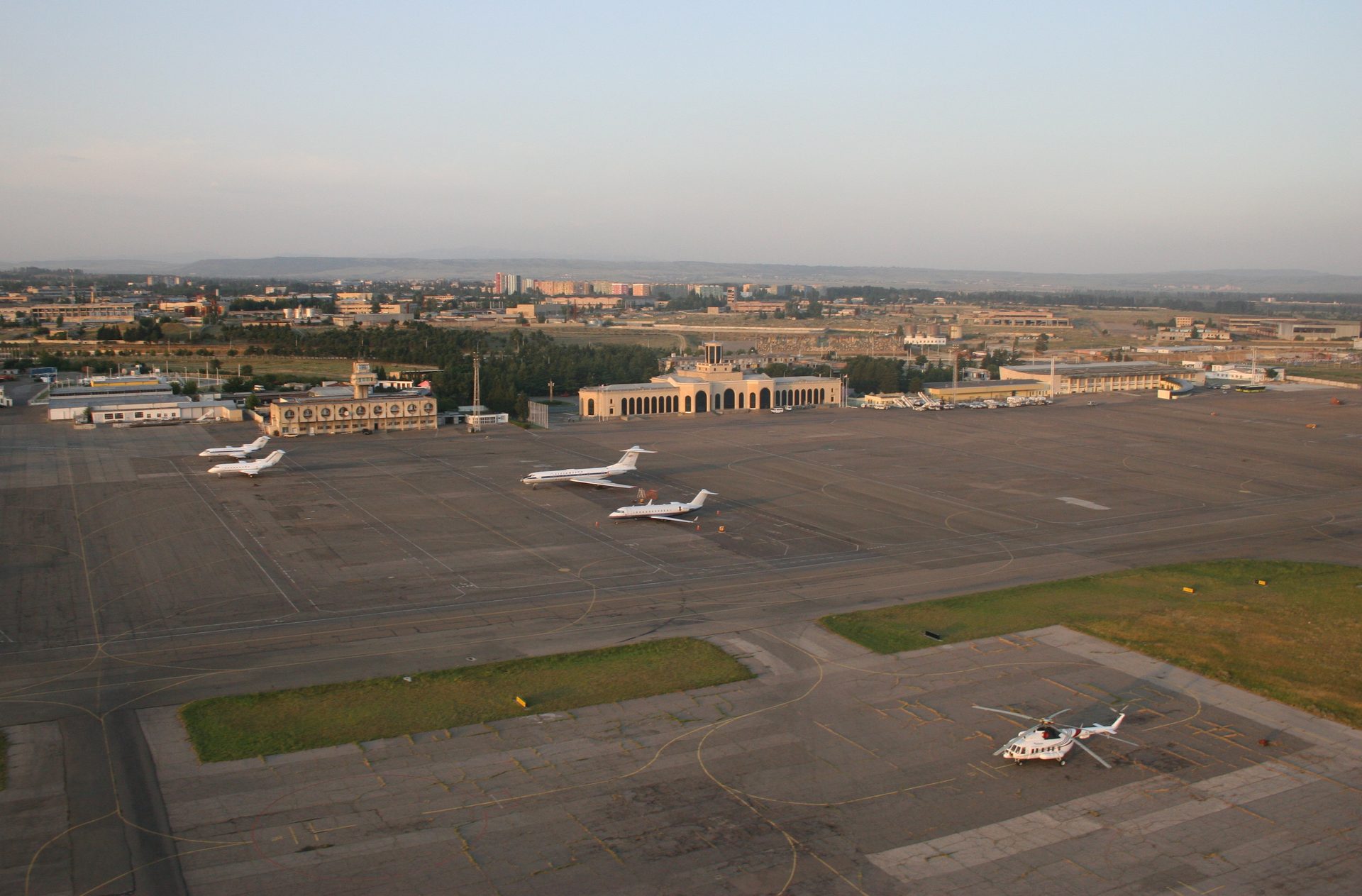
Case fileEF-024Tbilisi airport, 1983
The Wedding Party That Hijacked a Plane: Flight 6833, Tbilisi 1983
On 18 November 1983 a wedding party boarded Aeroflot flight 6833 in Tbilisi, bound for Batumi on the Black Sea. The groom, Gega Kobakhidze, was a young film actor; his bride, Tina, was nineteen.
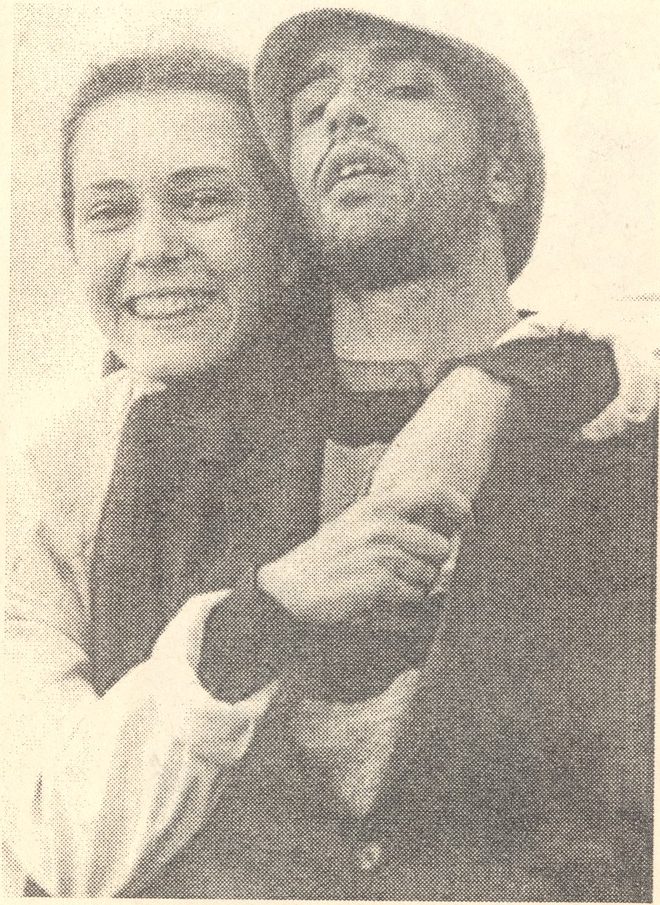
It was as if some force told me: close the curtain and work in peace.
Vladimir Gasoyan, the navigator
Alsandro, via Wikimedia Commons, CC BY-SA 3.0 (source)
The film
At a glance
- Period
- 1970 to 2017
- Countries
- Soviet Georgia (today Georgia), Soviet Union (today Russia and Estonia)
- Subject
- Flight 6833 and the young people who tried to fly it out of the Soviet Union
- Key locations
- Tbilisi airport, Tbilisi, Sioni Cathedral, Tbilisi, Batumi, Natanebi, Sukhumi, Rustavi, Leningrad, Moscow, Tallinn
- Themes
- Flight 6833, Gega Kobakhidze, Vladimir Gasoyan, Tu-134, hijacking, Soviet Georgia, Group A, cold war
- Episode
- EF-024 · 53 min · published 23 October 2026
Case overview
With five friends from well-known Tbilisi families they had brought guns aboard through a door meant for foreigners, to take the plane to Turkey. They did not know that the weather had already turned the crew back, or that the navigator, Vladimir Gasoyan, sat armed behind a curtain he always kept drawn. This is the file on flight 6833: the cockpit tape minute by minute, the night on the far stand at Tbilisi airport, the trial that Soviet Georgian television showed for thirteen days, and what the families were told only in 1989, in the words of the crew, the passengers, the hijackers and their families.
Gasoyan still keeps the cartridge that didn't fire. He found it in the hospital, when it fell out of his shirt. He said: "It will never be fired."
Timeline
In 1970 a father and son from Lithuania forced a plane from Batumi to Turkey, killing a stewardess on the way. The Soviet papers wrote about it for years.
A Georgian KGB officer, Igor Giorgadze, remembered one defendant's answer: "Look at the Brazinskases. They seized a plane, and the West carried them in its arms. That's what we wanted."
Related documentsThe court would later say that from 1979 the priest gathered people who wanted to leave the Soviet Union. They talked over every way out: marrying a foreigner, walking across the mountains into Turkey, or a boat across the Black Sea.
Some of them travelled to Tallinn, in Estonia, where a man showed them a motorboat. They thought about seizing a hydrofoil, with a party official's relative aboard as a hostage. And they talked about a plane. Father Theodore told the investigators that he liked that idea best at first, and that later he began to doubt it. His daughter, Eka, said: "He told them that it would end in bloodshed, and he warned them that no one would be spared."
Related documentsIn early 1982 Dato Mikaberidze bought a revolver from someone the investigators never identified. Soso bought another in the spring of 1983. Over the next months they found two pistols as well, and two hand grenades.
That summer Gega and Soso flew to Leningrad to buy a sleeping gas for the police, and came back with tear gas.
Related documentsThis is Kakha Iverieli, twenty-eight, a doctor who runs a village clinic. On the fourteenth he buys seven tickets for flight 6833, Tbilisi to Batumi, then on to Kyiv and Leningrad. They chose it for its passengers. People from other Soviet republics will be on board, and Kakha's reasoning, as the court recorded it, was that the Soviet authorities would not shoot at their own citizens.
On the seventh and eighth of November, at Gega's flat, the group works out the details: how to get the guns aboard, who boards when, and what each of them does. They fire practice shots inside the flat. And they choose their cover. Gega and Tina will marry, and the wedding party will fly to Batumi on honeymoon.
Related documentsAt a family dacha in the hills above Tbilisi, they elect Kakha as their leader. They also write a note for the pilots.
It says: "Pilots! There are seven of us. We demand that you land the plane at any Turkish airfield. We are armed. If you deceive us and do not obey our will, we will blow up the plane. Report nothing to the ground. Think of the stewardesses and the passengers. If you agree to our demands, let one of you come out into the cabin." But then they drop the note. A note would give the crew time to think. They decide to take the cockpit by surprise.
The wedding is that evening. Gega's closest friend, the composer Dato Evgenidze, has flown in from Moscow for it. He later remembered that the best men were young men he didn't know, and that doves were released. One of the Iverieli brothers climbed onto a chair, took a dove in his hand and mimed tearing its head off. Evgenidze said it horrified him, and he left early.
After two in the morning he finds a note on his door: "We came, you weren't home. Gega, Tiniko and company." He and their friend Irakli go round to Gega's and knock on his window, and they all go back to Evgenidze's flat. They stay up all night, laughing and fooling around. But Evgenidze said Tina didn't smile once.
Related documentsIn the cockpit the weather briefing says Batumi is good, above the crew's minimum. At three forty-three in the afternoon, Moscow time, flight 6833 takes off.
The crew draw their pistols, one each for the captain, the trainee and the navigator, eight rounds apiece. Gasoyan leaves his in the captain's briefcase and stays behind to collect the latest weather report. By the time he walks out to the plane the passengers are seated, and the curtain between the cabin and the galley is drawn. Nobody in the cabin sees him come aboard. He takes his pistol back, climbs down into his seat in the nose, and draws his curtain. But the wedding party came aboard another way. An airport duty officer, a young woman they had invited to the wedding, took six of them through her office and out onto the apron by a door meant only for foreign tourists. She didn't know what they were planning. The six were Gega, Tina, Soso and Dato, and two of Tina's friends who were coming on the honeymoon. One of the friends carried the bag with the guns, and she didn't know what was in it. Kakha, Paata and Gia came through the main hall with everyone else.
Related documentsThe plane is over the coast at Natanebi, north of Batumi, at four thousand two hundred metres. The crew talk it over for a moment. Then: "Tell them we're turning round." At ten past four the plane banks right and heads back east.
But at nine minutes past four the Sukhumi controller passes on the latest from Batumi: visibility three kilometres, and a tailwind of eight metres a second. A minute later he asks: "Eight-oh-seven, you'll go to Tbilisi, yes?" But in the cabin, the wedding party has no idea. Twenty years later Tina said she found out only during the investigation that the plane had turned back before they made their move.
Related documentsAt thirteen minutes past four Kakha stands up and walks toward the front with Soso. It's the signal. The stewardess Irina Khimich sees a passenger in the second row hit over the head with a champagne bottle. Then he is shot in the head. He's Aluda Solomonia, a manager at a gas company, and they had taken him, in his blue suit, for a plainclothes guard.
This is Gia Tabidze, thirty-two, a painter and the oldest of them. He shoots another passenger three times: an off-duty navigator flying on holiday in his Aeroflot uniform, whom they took for one of the crew. The man survives. Dato shoots a third man in the chest, and he survives too. A grenade goes up over the seats, and Khimich hears the shout: "The plane is seized, we're flying to Turkey!" They push her back into the galley, and when she grabs the intercom to warn the crew, they tear the handset out with its wires. They wind her long hair round a hand and beat her with a pistol. They take the senior stewardess, Valentina Krutikova, to the cockpit door. The crew have a knock that only the stewardesses use. Now that knock is heard on the cockpit door. The inspector, Zaven Sharbatyan, a pilot with more than thirty years of flying, looks through the peephole, sees Krutikova's face, and opens the door. Two men burst in, firing, and Sharbatyan goes down, shot in the face. They put their guns to the pilots' heads and tear off their headsets. Gasoyan understood Georgian, and he remembered what they shouted: "Now fly to Turkey. The plane is seized. Otherwise we'll shoot you too, like your comrade." The flight engineer, Anzor Chedia, gets up from his seat between the pilots and asks: "Who are you? What do you want?" The man on the right shoots him, and Chedia falls back into his seat.
Related documentsAt twenty to five, Moscow time, a minute after sunset, in the rain, flight 6833 lands in Tbilisi. As the wheels touch, Kacharava hears a woman cry out: "Dato, they've tricked us! It's Tbilisi!" Dato Mikaberidze runs to the back of the cabin and shoots himself.
Before the landing, Khimich had cracked open the emergency hatch, in case a hard landing jammed it. Now, with the plane still rolling, she shouts to Krutikova: "Jump!" Krutikova says: "I'm scared." Khimich jumps onto the concrete. But someone shouts "Stop or I'll shoot!", and bursts of gunfire pass over her head. She falls face down in the wet grass. Valentina Krutikova is killed in the doorway. A young soldier who had been sitting by an emergency exit climbs out onto the wing and runs. The troops around the airfield open fire. In the cabin, Kacharava hears the hijackers shout: "Look how they welcome us!" A bullet comes through into the cockpit, and fragments lodge in Gabaraev's leg. Decades later they are still there. The radio goes dead. At four forty-three the engines stop, at the far end of the airfield, opposite the helicopter stand.
Related documentsNow the plane stands alone in the rain under floodlights, ringed by soldiers, with about fifty passengers still inside. Through the open hatch Tina passes on the demands: fuel, a new crew, and a flight to Turkey. A passenger who is let out to carry the terms runs off. After that a woman is sent to the door to negotiate, while her small child is kept in the cabin. A witness later told the court that the hijackers threatened to kill the baby if she jumped.
Gega's mother, Natela, gets a phone call at home: something has happened, her son is involved, please come to the airport. There, she asks to speak to Gega over a loudspeaker. She's sure he'll listen to her. But they won't allow it. She later said that she heard Shevardnadze shouting: "Who gave the order to shoot?" Shevardnadze stays at the airport through the night. Two years later a CIA assessment noted that he had gone to the airport to take charge of the crisis. In Moscow, at about six in the evening, the alarm goes off at the base of Group A, the KGB's anti-terror unit. Late that night its men land in Tbilisi. Shortly before midnight an aircraft technician, Arushan Gevorkyan, volunteers to go aboard, so that the plane can be powered up and the fuel drained. The hijackers make him take off all his clothes first. In the wind and the rain he climbs the rope into the cockpit. Through the door they promise him millions to open it. He doesn't answer. A Group A officer, Vladimir Zaitsev, walks out to the plane in a cotton overall, posing as an engineer. He said: "I went up to the plane, and suddenly a gun barrel from there, at me. I think: freeze. That's it, I stopped and stood. I froze terribly."
Related documentsThe hatches come open, and the plane fills with men shouting: "Lie down!" Kacharava said it happened in an instant, in seconds. Soso, Kakha, Paata, Gega and Tina are taken alive. Group A's commander said that from the command to the last hostage on the ground took no more than three and a half minutes.
Vladimir Zaitsev goes in first. He said he told the others: "If they cut me down, pay no attention. Go on over me, and carry out the task." Tina remembered it like this: "It was dark on board. And all of a sudden someone jumped out of the ground. A man was literally growing in front of me. He was huge." When he asked if she was a passenger, she said yes. Paata is pressed against a window with a revolver and a pistol in his hands. He hears bullets whistle past his face, sees red rings in front of his eyes and passes out. He comes to at the sound of a radio saying the bearded ringleader has been taken. When a commando shines a light in his face, he says he isn't the leader. The passengers are led out one by one, on their knees, with their hands behind their heads, onto mattresses laid on the concrete. A father hands his child to Zaitsev and tells him: "I trust nobody, only you." Seven people have died on and around flight 6833: three of the crew, two passengers and two of the hijackers.
Related documentsOn the twenty-fourth of November the newspapers announce, with deep sorrow, the deaths in the line of duty of Anzor Chedia, Valentina Krutikova and Zaven Sharbatyan, and of two passengers, Aluda Solomonia and Pavel Aboyan. The state pays for the funerals. But the notice doesn't say what happened.
On the back page, under the heading "In memory of comrades", are the three crew portraits. The obituary calls Krutikova a former nurse with more than four thousand hours in the air. But inside the party, the response is organised. On the twenty-second of November the bureau of Georgia's Central Committee orders television programmes and articles to unmask the group's "pseudo-patriotism". A closed letter to party members calls them drug addicts. Years later, the chairman of a Georgian parliamentary commission said the trial had never confirmed it. The outside world hears rumours. A Russian émigré paper in New York reports nine dead. Moscow gossip has a pistol smuggled aboard inside a globe, and two girls throwing themselves in front of the bullets.
Related documentsGeorgia's Academy of Sciences writes to every scientist in the republic. It says that Soso's father, the scholar Konstantine Tsereteli, has been forced to give up his professorship and his chair, "because of regrettable mistakes in the upbringing of his son".
But by then Soso is dead. He died in custody of the wound in his neck, on a date nobody recorded. His family says he was left untreated. His mother said she was shown a letter, supposedly from him, taking all the blame, and she knew at once that it wasn't Soso's handwriting. He is the eighth to die.
Related documentsEarly on a February morning, KGB officers came for Father Theodore. He was in bed with a fever. His family remembered the time because the radio was playing the Soviet anthem.
His daughter, Eka, said: "And as my Dad was leaving, he made his sign for 'one-way'. He looked so proud that they didn't handcuff him. They didn't dare. Then he left. That was all. I haven't seen him since."
Related documentsIn February 1984 the captain and the navigator are made Heroes of the Soviet Union, the country's highest honour, before anyone has stood trial. The decree carries the name of the Soviet leader, Yuri Andropov, and it is printed the day after he dies. Krutikova, Chedia and Sharbatyan are given the Order of the Red Banner after their deaths.
On the fourteenth of March, at the airport's House of Culture, Shevardnadze hands the gold stars to Gardapkhadze and Gasoyan himself.
Related documentsOn the twenty-seventh of February 1984, it says, a separate criminal case was opened about the soldiers who fired on the plane after it landed. One passenger was killed by their bullets, and eleven were wounded.
Gega's lawyer later said that nobody was ever punished.
On the first of August the trial opens at the Supreme Court of Soviet Georgia. It runs for thirteen days, twelve hours a day, and every day it is on television. In the dock sit the priest, Kakha, Paata, Gega, Tina and the airport duty officer. Eka Chikhladze said the courtroom was packed, mostly with KGB men, and only eight people came from the families.
The prosecution's story starts with the priest. In its version Father Theodore led the group from the beginning, and on the day he was to board in his robes, with the guns under them, and carry the note into the cockpit. But the verdict itself records that the group held its last meetings without him and took the final decision without him. And the prosecution's own papers, which reached the West that winter, say that he did not actually take part in the hijacking. When his statement to the investigators is read back to him, the priest asks: "Did I say that?" Asked about a grenade, he says: "Yes, but not a real one. It was only a dummy." He is right. The court's own verdict lists the two grenades on flight 6833 as training grenades.
Related documentsOn the thirteenth of August 1984 the court sentences Father Theodore, Kakha and Paata Iverieli and Gega Kobakhidze to death by shooting. Tina gets fourteen years. The duty officer gets three years, suspended. The verdict is final. There is no appeal, only a plea for mercy.
The verdict names Krutikova's killer: Soso Tsereteli, who shot her, it says, from the forward baggage compartment as she tried to follow Khimich out. Soso had died in custody months before, and could not answer. Later, a Georgian historian, and a television documentary that drew on the case file, said she was hit by fire from outside the plane. The verdict puts the airline's loss at more than half a million roubles, about two million dollars today. A lawyer told the families there was one slim chance: a plea for mercy signed by the republic's best-known people. A family friend, the film director Buba Khotivari, went round the summer resorts collecting signatures, and he said the first to sign was the sculptor Zurab Tsereteli. The actress Veriko Anjaparidze started a separate letter from the mothers. By the account that reached the West, there were three thousand signatures. But then, Khotivari said, people were called in one by one and asked to take their names off. On the twentieth of September the priest's daughter, Eka, now fourteen, writes to Shevardnadze by hand and begs him for her father's life. Her letter is registered and stamped.
Related documentsOn the twenty-third of August 1984, ten days after the verdict, the head of the Georgian KGB's investigation department sent the airline back the plane's flight recorders and the tapes of its radio calls. He asked that the recordings on them be erased, in front of a KGB officer.
But a transcript had already gone into the case file. Seventeen years later the priest's daughter printed it in her book, every minute of it, down to the last call before the engines stopped.
Related documentsOn the third of October 1984, fifty-one days after the verdict, the four men are shot in Tbilisi. No Soviet newspaper reports it.
Ten days later, Georgia's Komsomol daily writes about a group of armed bandits and true traitors to the motherland: "A bandit is a bandit." The families are not told. A rumour says the young men were sent to Siberia, and Gega's friends bring warm clothes to his mother for him. Evgenidze said that was when he understood what the purges of 1937 had meant. Natela Machavariani said: "For five years I did not know whether he had really been shot. I received no document." She wrote to Moscow again and again. One day a letter came: Gega Kobakhidze had been shot on the third of October 1984.
Related documentsIn March 1989 a resolution of the Georgian party bureau finally lets the families be told. On the ninth of April, Soviet troops break up a protest in central Tbilisi, killing about twenty people, and Georgia turns against Moscow.
On the twenty-second of May 1989 Tina Petviashvili is released, after five and a half years. Her sister said she had spent much of it in a cell on her own, painting with a box of paints the prison gave her.
In 1990 Georgia elects its first non-communist parliament, and it sets up a commission to establish what happened to the people who tried to hijack flight 6833. In November 1991 the commission's chairman, Viktor Domukhovsky, goes to Moscow to question Shevardnadze, the former Soviet foreign minister. Shevardnadze tells him: "I wanted to go to them myself, to talk them round. They wouldn't let me. We begged them to surrender. We promised to pardon them, to forgive them."
Of the priest he says: "He is guilty. He was the leader of the gang. He confessed." He also says that he asked the intelligentsia not to sign the plea for mercy. In the new Georgia the young men become "the airplane boys". The crew said they were accused of conspiring with the KGB and massacring fighters for freedom. The memorial stone with the names of Chedia, Sharbatyan and Krutikova is torn out of the ground. Gardapkhadze said: "I don't repent that I fired." Gasoyan was declared unfit to fly. He spent a year proving he was fit, and he flew again. In June 1993, during Georgia's war in Abkhazia, he flew a Tu-154 into Sukhumi to bring out refugees and wounded, and a missile went through its tail. Independent Georgia, now led by Shevardnadze, decorated him.
Related documentsThe four men shot in 1984 have never been found. Around 2001 a man offered to show the families where the boys were buried. Gega's mother said: "We started digging with our own hands. But it was only Soso Tsereteli."
Every eighteenth of November, Soso's family flat, now a museum, remembers the airplane boys. In 2003 Tina said on camera: "I will always believe that any desire for freedom isn't justified when it's at the expense of other people's lives. It didn't get us anywhere, and it didn't change anything. No one has got more freedom." In 2017, at the Moscow premiere of a feature film about the hijack, Irina Khimich said: "I forgive them, of course. But I cannot understand it to the end." The flight engineer's daughter, Teona Chedia, was eight when her father was killed. She has said there is so much blood in this story that there is no room to romanticise it.
Related documents
Key locations
Full mapDocuments and evidence
Sources
- Documentary
Bandits credo:film, with ARTE, RBB and HFF “Konrad Wolf”, 2003.
In 2003 Tina said on camera: "I will always believe that any desire for freedom isn't justified when it's at the expense of other people's lives. It didn't get us anywhere, and it didn't change anything. No one has got more freedom."
- Documentary
Rustavi 2 report on case file No. 201 MIA Archive of Georgia, online exhibition, about 2006 to 2007.
But a transcript had already gone into the case file.
- Documentary
Moambe: The red verdict of the red regime Georgian Public Broadcaster, 16 November 2013.
- Documentary
Journalist's Diary: The Airplane Boys
In the new Georgia the young men become "the airplane boys".
- Documentary
The Hijacking of the Tu-134A: Vladimir Gasoyan Remembers 10 April 2020.
Gasoyan later said: "It was as if some force told me: close the curtain and work in peace."
- Documentary
- Documentary
Group A: The Zaitsev Era 2025.
A Group A officer, Vladimir Zaitsev, walks out to the plane in a cotton overall, posing as an engineer.
- Documentary
The KGB Investigates 2025.
Khimich said she remembers nothing of the next five or six hours.
- Documentary
Radio Tavisupleba, 24 March 2025: Teona Chedia 24 March 2025.
The flight engineer's daughter, Teona Chedia, was eight when her father was killed.
- Documentary
The Story of One Witness 2017.
Further back, in row thirteen, sits Boris Kacharava, a lecturer in electrical engineering who flies this route to teach at his institute's branch in Batumi.
- Documentary
The Moscow premiere of “Hostages” 12 September 2017.
In 2017, at the Moscow premiere of a feature film about the hijack, Irina Khimich said: "I forgive them, of course. But I cannot understand it to the end."
- Book
Dasakhvreti Saqme (A Case for Execution) Azri, Tbilisi; National Parliamentary Library of Georgia, 2001.
Seventeen years later the priest's daughter printed it in her book, every minute of it, down to the last call before the engines stopped.
- Archive
Criminal case No. 201 Archive of the Ministry of Internal Affairs of Georgia.
Later, a Georgian historian, and a television documentary that drew on the case file, said she was hit by fire from outside the plane.
- Archive
Terrorism Review, 7 October 1985 CIA Reading Room, via the Internet Archive, 7 October 1985.
Two years later a CIA assessment noted that he had gone to the airport to take charge of the crisis.
- Archive
Kote and Soso Tsereteli Memorial House-Museum
Every eighteenth of November, Soso's family flat, now a museum, remembers the airplane boys.
- Web
- Newspaper
Zarya Vostoka National Parliamentary Library of Georgia, 17 October 1970.
TASS on the hijack, Oct 1970
- Newspaper
Zarya Vostoka National Parliamentary Library of Georgia, 24 November 1983.
Notice of 24 November 1983
- Newspaper
Komunisti National Parliamentary Library of Georgia, 24 November 1983.
The obituary and the three crew portraits
- Newspaper
Molodyozh Gruzii 24 November 1983.
Notice of 24 November 1983
- Newspaper
Zarya Vostoka National Parliamentary Library of Georgia, 6 January 1984.
Academy of Sciences, 1984
- Newspaper
Zarya Vostoka National Parliamentary Library of Georgia, 8 February 1984.
Tbilisi timetable, 1984
- Newspaper
Zarya Vostoka National Parliamentary Library of Georgia, 10 February 1984.
The Star Hour of Courage, 1984; the awards, with a Gruzinform photograph
- Newspaper
Molodyozh Gruzii 17 March 1984.
The stars handed over, 1984
- Newspaper
Molodyozh Gruzii 13 October 1984.
Tbilisi, 13 October 1984
- Newspaper
Molodyozh Gruzii 23 November 1990.
The commission, 1990
- Newspaper
Svobodnaya Gruzia National Parliamentary Library of Georgia, 27 November 1991.
Shevardnadze, November 1991
- Newspaper
Rabochaya Tribuna Moscow, 14 January 1993.
Alpha, the KGB's secret unit; the crew accused, 1993
- Newspaper
Russkaya Mysl Paris, 8 December 1983.
Paris, 8 December 1983
- Newspaper
Russkaya Mysl Paris, 2 June 1989.
Paris, 2 June 1989
- Newspaper
Novoye Russkoye Slovo New York, 23 November 1983.
New York, 23 November 1983
- Newspaper
Novoye Russkoye Slovo New York, 30 December 1984.
New York, 30 December 1984
What remains unresolved
- Who do you think was to blame, and for what?
- Was justice done to anyone on flight 6833?
- Who gave the order to shoot?
Related files
 The Sealed Death of the Dictator's DaughterAlso in Moscow
 Poland Sent a Spy to Los Angeles. He Recruited the Man Next DoorAlso in Moscow
 Czechoslovakia Sent a Spy to London. A Dutch Mother Thought He Was Her SonAlso in Moscow
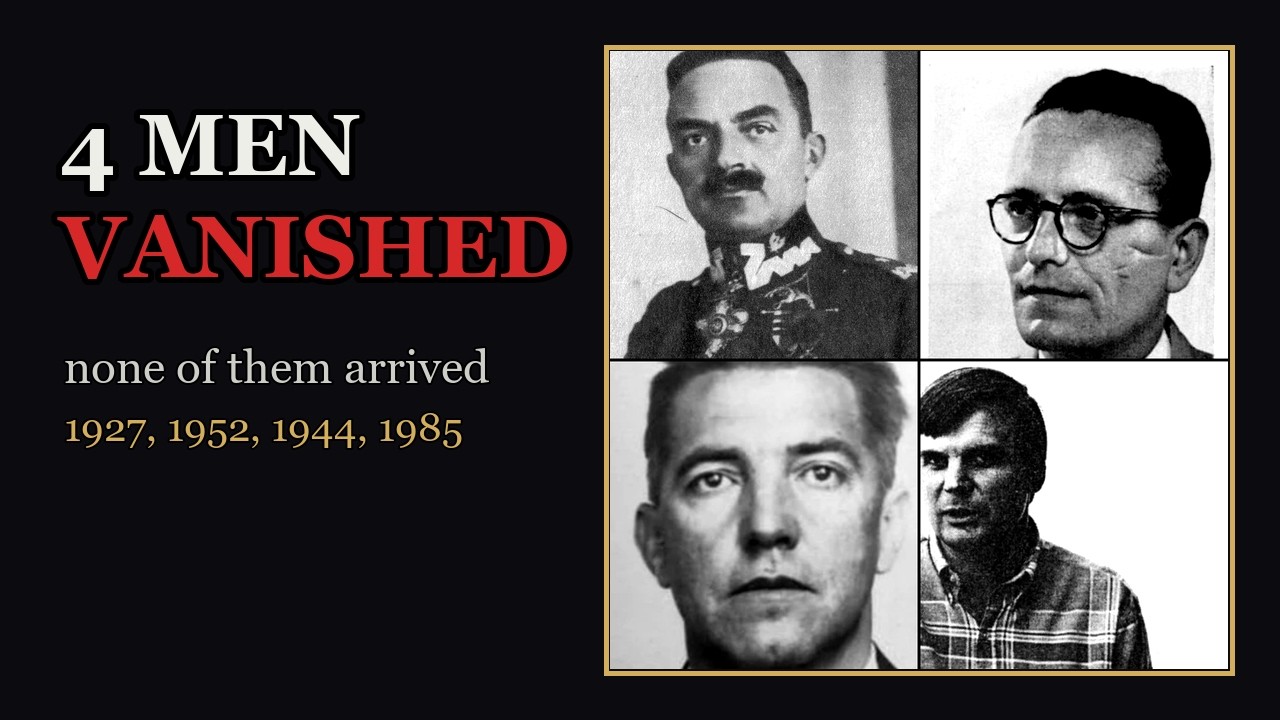 4 Men Who Never Arrived: The Strangest Disappearances of Eastern EuropeAlso in Moscow