Case fileEF-018Warsaw
4 Men Who Never Arrived: The Strangest Disappearances of Eastern Europe
Four doors, four decades, four countries. In Warsaw in 1927 a general steps out of an army car on the city's grandest street and walks into a bathhouse.
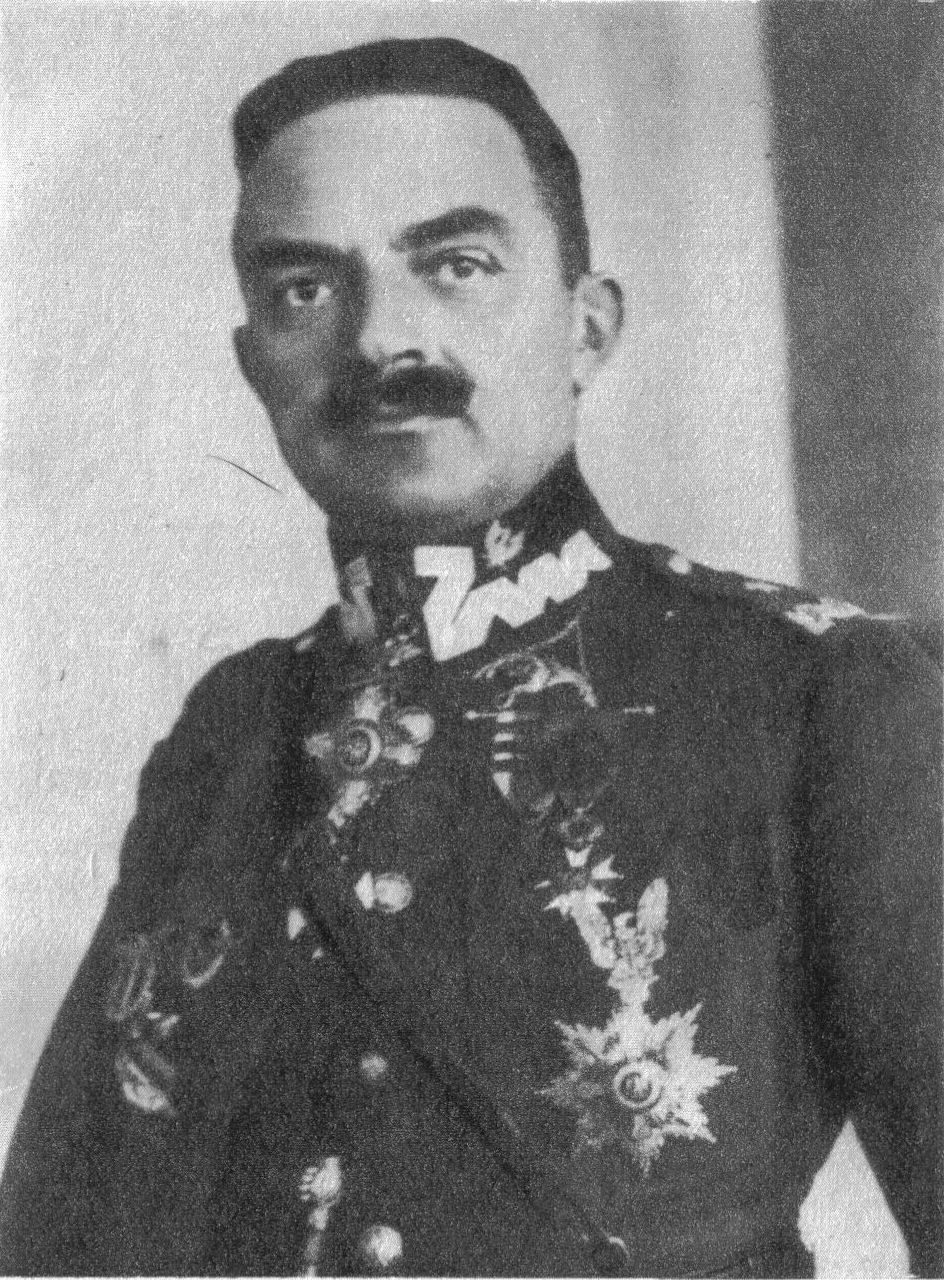
Everything that happened to him is unexplainable and unforgivable.
A mother and a wife in Moscow, in a letter to Senator Edward Kennedy, February 1986
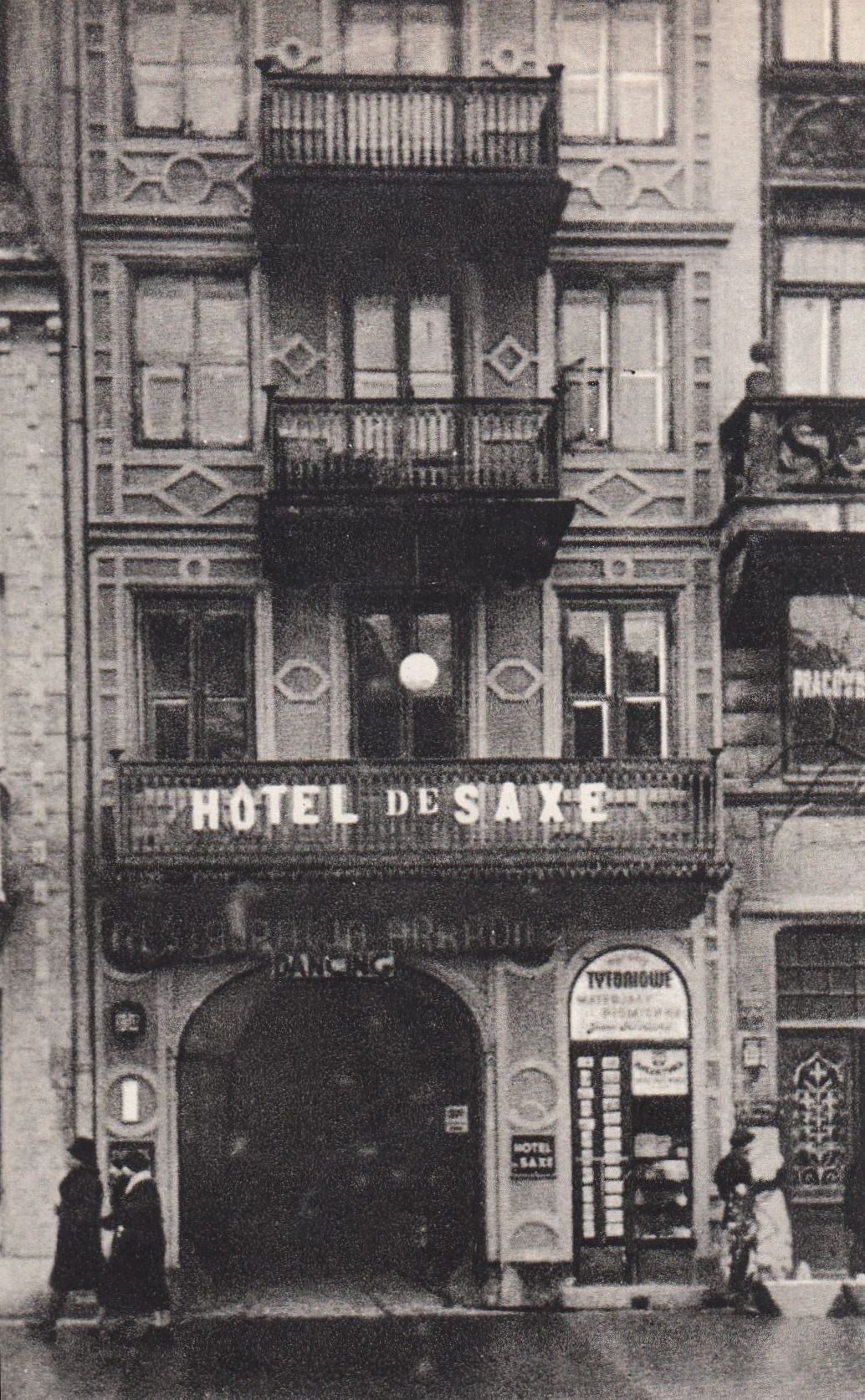
The Hotel Saski, Krakowskie Przedmiescie, Warsaw. Unknown photographer, via Wikimedia Commons, Public domain (source)
The film
At a glance
- Period
- 1926 to 2007
- Countries
- Poland, Lithuania, Germany, Russia, Romania, Spain
- Subject
- Four men who walked toward a door: Włodzimierz Zagórski, Walter Linse, Ștefan Foriș and Vladimir Alexandrov
- Key locations
- Warsaw, Wilno, Gdańsk, West Berlin, Chemnitz, Moscow, Bucharest, Oradea, Madrid, Córdoba, Moscow
- Themes
- true crime, cold case, disappearance, Warsaw 1927, West Berlin 1952, Madrid 1985
- Episode
- EF-018 · 27 min · published 2 September 2026
Case overview
In West Berlin in 1952 a lawyer leaves his house at half past seven in the morning for the office. In Bucharest in 1944 the man who runs a banned party keeps an appointment in a rented room. In Madrid in 1985 a Soviet climate scientist is driven to his embassy's gate at nine at night. None of the four arrived where they were going. This episode follows what the files, the newspapers and the families kept about each of them.
Between them the four men span fifty-eight years and four countries, and each of them walked toward a door. What happened on the other side took decades to come out, or has never come out at all. Which of them was taken, and which of them chose to disappear?
Timeline
Piłsudski had taken power in May 1926. Zagórski had commanded the government's aircraft against him, and lost. He was arrested with three other generals, and the four of them were taken four hundred kilometres east to a military prison at Antokol, in Wilno.
His applications for release were refused one after another. A professor who visited him in June 1927 wrote that he wanted a trial, certain it would clear him. On the fourth of August 1927 a military court lifted the arrest. Nobody told him. The release order did not go to the prosecutor in Wilno. It went to Aleksander Prystor, the head of Piłsudski's private office, and on the same day the Marshal's adjutant, Major Zygmunt Wenda, telephoned the staff garage in Warsaw and asked for a Cadillac without a driver.
Related documentsWarsaw, the sixth of August 1927, a warm Saturday evening. A green army Ford drove in from the railway station on the far bank of the Vistula with four men in it: a private at the wheel, a captain, a major, and a passenger in a civilian suit. On Krakowskie Przedmieście, the long street that runs from the Old Town toward the palaces, the captain told the driver to stop opposite a bathhouse. The passenger got out and said he was going to take a bath. Then he walked toward the door.
At six on the morning of the sixth of August an officer woke Zagórski in his cell and told him to change into civilian clothes. He said: you are doing to me what you did to General Rozwadowski, but I will not let you. At twenty past eight he left Wilno on train 714 with Captain Lucjan Miładowski. The train reached Warsaw's Wilno station at a quarter to eight that evening. Wenda was on the platform. Outside stood the green Ford, and a dark cherry Cadillac with curtained windows and four men inside.
Related documentsBetween the eleventh and the twenty-ninth of August thirteen editions of Warsaw newspapers were confiscated for asking about a cherry-coloured Cadillac. An investigating judge, Major Wilhelm Mazurkiewicz, took the file. He could not get Prystor to appear at all. He summoned Colonel Wieniawa-Długoszowski, whose pool the Cadillac had come from, seven times, and seven times there was an excuse. When he began to work on the car itself, his superiors suspended the case, and the file went on a shelf. On the twenty-ninth of August the police gazette printed a wanted notice charging the general with leaving the ranks without permission.
And when the chief military prosecutor asked the Marshal about the search, Piłsudski told him, by the prosecutor's own account, that if his gendarmes had nothing better to do they could go and look for the wind in the field.
Related documentsThree and a half weeks after he vanished, a fisherman off Jastrzębia Góra pulled a sealed bottle out of the Baltic. The note inside was a joke addressed to everyone looking for him, signed General Zagórski. Then, in the middle of September, two letters arrived from Gdańsk. One brought forty złoty to a fund for the widows of airmen, the other sixty to an officers' club, together about two hundred dollars in today's money, repayments on loans from before his arrest.
The army's handwriting expert examined them and said the hand was his. A man who pays his debts is alive, and the army's next yearbook listed General Zagórski as missing, and charged with desertion.
Related documentsBucharest, the fourth of April 1944, early afternoon. American bombers came over the city in daylight for the first time and flattened the district around the North Station. Thousands of people died. In a rented room at the edge of the burning district, a man named Ștefan Foriș was waiting for a courier from Moscow. He was fifty-one, a Hungarian-speaking mathematician from a village near Brașov, and for the past three and a half years he had been the general secretary of the Romanian Communist Party, a party of about a thousand members, all of them in hiding.
The courier did not exist. The message had been a bluff to fix the meeting. That evening Emil Bodnăraș came to the room, a former officer who had done ten years in prison for spying for Moscow. Three men waited outside with a car. Bodnăraș put a typed sheet on the table, kept one hand near his pistol, and read out a decision removing Foriș as general secretary, for treason. Foriș read the sheet and said: I submit. He was driven to a house across the city, and nobody outside that room was told anything.
Related documentsHis partner, Victoria Sârbu, was taken with him. Twelve days later Bodnăraș sent a coded letter to a prison camp, to the man who would take Foriș's place, Gheorghe Gheorghiu-Dej, saying that the head of the family had been moved to a good sanatorium.
The Romanian secret police did not notice for four months that the leader of the Communist Party had disappeared.
There was a machine for this, and it belonged to the party, not the state. When the party removed its own general secretary there was nothing to arrest him with, so it isolated him instead. The party's own file describes the arrangement: one month on a newspaper, then isolation under permanent guard; from late August 1944, after Romania changed sides in the war, walks in the city, but only accompanied.
Related documentsAfter the Second World War the two letters from Gdańsk were examined again, by the forensic institute of the national police, and it ruled that Zagórski had not written them. The one piece of evidence that he had run away stopped being evidence.
The historian Andrzej Garlicki wrote that there was no doubt he had been murdered, and that nothing beyond that was certain. Dariusz Fabisz says every theory rests on circumstance. No body has been found, no remains, and no grave, in ninety-nine years.
Related documentsBucharest 1944: picked up off the street
In January 1945 he was released. On the ninth of June 1945 he was picked up off a Bucharest street by the head of the Central Committee's own security section, a Soviet intelligence officer born Pantelei Bodnarenko, who called himself Gheorghe Pintilie, and who three years later would run the Securitate.
His mother, Anna, was seventy years old and lived in Oradea. She came to Central Committee headquarters in Bucharest again and again, weeping, the party's own report says, and asking for her son to be given back to her. In the summer of 1946 the party put her on a train back to Oradea, into the house of a local activist, under the supervision of the local committee.
Foriș himself, from custody, in December 1944, had written to his captors asking them to calm her down, because she was threatening to go to foreigners about his case and it would harm the party.
Berlin, the eighth of July 1952, half past seven in the morning. In Lichterfelde, in the American sector, a lawyer named Walter Linse came out of his building on Gerichtsstrasse to walk to his office. A man stepped up to him, asked him the time, and asked him for a light. Linse reached for it. The man took him by the arm, spun him round, and put his other arm around Linse's neck.
Linse tore himself free and ran. The man caught him again and fell into the open door of a car with him. The car was a black Opel Kapitän dressed up as a taxi, with the number plates of a real West Berlin cab. As it pulled away Linse's legs were still hanging out of it. A second man told him to pull them in. When he did not, the man shot him in both legs. A delivery driver named Jeschke had watched the whole thing from his van. He chased the taxi on his horn, and shots came out of the taxi at him. He flagged down a police car, and the police car took up the chase. The court that later tried the case recorded how it ended: it was too late. The taxi had crossed the sector line.
Related documentsTwenty-five thousand people stood in front of the Schöneberg town hall, and the governing mayor, Ernst Reuter, begged the world for help for this one man.
On the far side, in Brandenburg, an officer of the East German Ministry for State Security was waiting. He paid each of the four men in the car a thousand West marks, about three thousand dollars in today's money. The Ministry's file called it a catch bounty. The East German party newspaper wrote that an agent had got lost. There was no wall yet, and a car could cross the line between the halves of the city in a minute. Between 1949 and 1961 the Ministry for State Security took several hundred people off the streets of West Berlin and carried them east, and it did not send its own officers to do it. It hired criminals.
Related documentsIn October the British foreign secretary, Anthony Eden, told the House of Commons that there was no information available as to the fate of Dr Linse.
Then nothing. His wife, Helga, waited.
Related documentsIn December 1952 the Ministry handed him to the Soviets. On the twenty-third of September 1953 a Soviet military tribunal sitting in Berlin-Karlshorst sentenced him to death. He was taken to Moscow and shot on the fifteenth of December 1953, the date the Soviet Red Cross had given his family and then taken back.
He had been held for five months in the Ministry's prison at Hohenschönhausen and questioned for up to eighteen hours a day, and he had not confessed, so the show trial he had been taken for never happened.
West Berlin 1952: the street renamed, a death declared
Men who came home from the Soviet camps in 1954 and in 1955 said they had seen Linse there, alive. In 1960 the Soviet Red Cross answered a German enquiry and gave the family a date of death, and then withdrew the letter and called it a mistake. In 1961 West Berlin renamed Gerichtsstrasse after him, and in 1962 a West German court declared him dead.
In December 1961 Gheorghiu-Dej said publicly that in Romania there were no grave injustices to forgive and nobody needed rehabilitating.
In April 1945, in a cellar in Bucharest, Victoria Sârbu had given birth to a daughter. In December 1949 she was arrested herself. She served six years, and when she came out in 1955 nobody had told her where the child's father was.
Gheorghiu-Dej died in 1965. His successor, Nicolae Ceaușescu, opened the files, and in 1967 and 1968 a party commission took evidence from the men involved. They named each other on the record. In April 1968 the party admitted it at a plenum of the Central Committee. The treason charge was unfounded.
Ștefan Foriș had been killed in the summer of 1946, in a house on Aleea Alexandru, beaten to death, most accounts say with an iron bar, on a decision taken by Gheorghiu-Dej and three other leaders, and buried under the floor, two or three metres down, with two other men, only one of whom was ever identified. The floor was taken up and the remains were found. The same file has a page headed the disappearance of Ștefan Foriș's mother. It records that she was taken away, that she died, and that her body was put into the Crișul Repede river with a stone tied round her neck so that nothing would be found. The local activists told the commission that she had simply died.
Related documentsNobody was ever charged. In 1971 Ceaușescu decorated the man the party had held responsible, Gheorghe Pintilie. The house on Aleea Alexandru is the Polish embassy now. And the family had known for years before the party said a word, because the man who did it used to telephone them at night, in tears.
Related documentsOn the twenty-ninth of March he landed at Madrid, a day late, to speak at a conference of nuclear-free towns in Córdoba. A driver from Córdoba city hall was holding up a sign with his name on it when an official from the Soviet embassy tapped the driver on the shoulder: the embassy would meet him, the driver could follow, wait outside, and take him on afterwards. Alexandrov was inside for half an hour. The man who came out asked urgently for a bar, any bar, and within ten minutes, the driver said, he was absolutely drunk. His friends had never seen him like it. They knew a man of enormous self-control.
In Córdoba, twice in two days, the police picked him up off the ground in the old town, once in the Plaza de la Corredera. At three in the morning he arrived back at the conference by taxi and tried three times to pay the driver with a fifty-dollar bill, worth about a hundred and fifty dollars today. One of the councillors who saw him that weekend has never accepted the drink. He says the man he saw was drugged, or had been drugged.
Related documentsOn Sunday, Palm Sunday, the organisers sent him back to Madrid at four in the afternoon in the mayor's official car, a Seat 132, with two drivers instead of one, in case there was trouble. For five hours he said nothing except, whenever a roadside sign went past: restaurant, stop. They stopped once, on the open plain past Manzanares. Near Madrid he told the driver, airport, airport. The driver said yes, yes, yes, and at nine at night pulled up at the Soviet embassy, because that was where Córdoba had agreed to deliver him.
What happened at the gate depends on who is telling it. The conference's executive secretary told an American reporter that he tried to wrench the car door open while it was still moving, ran, and was caught by an embassy official. The two drivers told a Spanish newspaper that there was no running at all, that an official asked them to take him on to the hotel and they refused. Every version ends the same way: he was put into a Mercedes van, with a car behind it.
Madrid, the night of the thirty-first of March 1985, on the paseo de la Habana, a few blocks from the Soviet embassy. A guest checked into the Hotel Apartamentos Habana with one bag and a knapsack and was given the key to room 614. At about eleven he came back down and went out. Next door was a bingo hall. He asked for Spanish wine. They led him out of the front door. He came back in through the door from the hotel, and they walked him out again.
And for weeks nobody reported him missing. His American friends agreed among themselves to say nothing, in case he had defected. In May his wife, Alya, telephoned a professor in Seattle to ask whether anyone knew where he was. On the fourth of July the journal Nature printed that he had vanished without trace.
Related documentsThe Soviet embassy asked the Spanish police to look for him, unofficially, on the first of April. It did not ask formally until the seventeenth of July, a hundred and eight days later. His wife was given no pension, and his colleagues in Moscow passed the hat for her.
Two months before Spain, an American official in Moscow had written a line onto his visa by hand: not permitted direct or indirect access to supercomputers in the United States. That October a columnist in Washington wrote that he had defected and was being debriefed by the CIA, citing sources he did not name, and two years later the head of the KGB's foreign intelligence told the CIA's deputy director to his face that the Americans were holding him. Neither side ever produced a document.
Related documentsMadrid 1985: the letter to Senator Kennedy
In February 1986 a letter reached Senator Edward Kennedy in Washington, from a mother and a wife in Moscow. Everything that happened to him, they wrote, is unexplainable and unforgivable. Forty years later nobody has claimed responsibility for Vladimir Alexandrov, no country has said what happened to him, and nobody has found him.
West Berlin 1952: the file from the KGB archive
The answer came out of Moscow in 1996, when a Berlin film-maker obtained Linse's file from the KGB archive. In May 1996 a Moscow military prosecutor rehabilitated him.
By 2007 the support association of the memorial at Hohenschönhausen was giving a prize in his name. That year a biography of Linse by the political scientist Benno Kirsch set out what he had found in the Chemnitz records: from 1938 Walter Linse had been the official at the Chemnitz chamber of commerce who handled the stripping of the district's remaining Jewish businesses, and in 1940 he had joined the Nazi Party.
The Berlin state commissioner for the Stasi files commissioned a study of his own, which reached the same finding and went further. The association suspended the prize, said that a man who had incurred guilt under the Nazi dictatorship could not be the namesake of a prize meant to honour the working-through of the communist one, and in December 2007 renamed it. The state study's author, Klaus Bästlein, closed on one sentence: whatever one makes of his entanglement, it had nothing to do with his abduction.
Key locations
Full mapDocuments and evidence
Sources
- Archive
Consiliul National pentru Studierea Arhivelor Securitatii (CNSAS), fond D, dosar 19, volume 14 CNSAS, Bucharest, 1968.
The party's own 1968 report on the Foris case: the isolation chronology, the finding that the treason charge was unfounded, and the page on the disappearance of Stefan Foris's mother.
- Archive
Interagency Intelligence Assessment: The Soviet Approach to Nuclear Winter, NI IIA 84-10006 December 1984.
In 1983 he was put at the head of a group of about twenty scientists modelling what a nuclear war would do to the weather.
- Archive
Information Bulletin, Office of the US High Commissioner for Germany, December 1952 Office of the US High Commissioner for Germany, December 1952.
Pages 21 and 22, Kidnaping of Dr. Walter Linse: the statement of West Berlin's police president on the abduction of 8 July 1952 and the men the police identified.
- Archive
House of Commons, 15 October 1952: Dr Linse (Kidnapping) Hansard, UK Parliament, 15 October 1952.
In October the British foreign secretary, Anthony Eden, told the House of Commons that there was no information available as to the fate of Dr Linse.
- Archive
Fototeca online a comunismului romanesc (IICCMER / Arhivele Nationale ale Romaniei) IICCMER.
Twelve photographs, item codes 32/1944, 164/1944, 54/1945, 112/1951, 28/1952, 34/1952, 297/1967, 3/1968, 6/1968, 8/1968, 85/1968 and 163/1968.
- Archive
NCAR Staff Notes, 2 June 1978, photograph by Robert Bumpas NCAR/UCAR OpenSky, 2 June 1978.
NCAR is host to two Soviet scientists: the captioned news photograph of Vladimir Sergin and Vladimir Aleksandrov, and the record of the 1978 visit.
- Archive
Wikimedia Commons contributors
The free-licensed photographs listed file by file in the published description.
- Newspaper
Missing: The Curious Case of Vladimir Alexandrov Science Digest, July 1986.
The reported account of the last days in Spain, the hotel on the paseo de la Habana, the drivers, the gate and the search.
- Newspaper
LIFE, 28 July 1952: How Dr Linse Got Lost Time Inc., 28 July 1952.
The captioned portrait of Walter Linse, the shoe left on the street, the rally, and the East German party newspaper's line that an agent had got lost.
- Newspaper
ABC, Madrid and Seville, July and December 1985 ABC newspaper archive, 1985.
The Spanish reports of the disappearance: the police confirmation of July 1985, room 614 and the bingo hall, the two drivers, and the December 1985 exchange between Moscow and Madrid.
- Newspaper
Rzeczpospolita, ABC, Kurjer Warszawski, Gazeta Sledcza and Cyrulik Warszawski, Warsaw 1927 Polona / Biblioteka Narodowa; Arcanum Digital Science Library, 1927.
Between the eleventh and the twenty-ninth of August thirteen editions of Warsaw newspapers were confiscated for asking about a cherry-coloured Cadillac.
- Newspaper
Ifjumunkas, Hargita, Magyar Szo, Magyar Hirlap, Nepszava and Salzburger Nachrichten Arcanum Digital Science Library.
The Hungarian, Yugoslav and Austrian press on the three eastern cases: the 1968 plenum, the 1952 Linse parcel returned undeliverable, and the 1985 and 1987 reports on Alexandrov.
- Documentary
Kidnapping Outrage Agitates West Berlin July 1952.
The newsreel of July 1952: Gerichtsstrasse, the sector boundary, and the rally in front of the Schöneberg town hall.
- Documentary
Nuclear Winter
The television record of the nuclear-winter years: Carl Sagan, the disarmament demonstrations, and a model run forward.
- Book
Vom NS-Täter zum Opfer des Stalinismus: Dr. Walter Linse. Ein deutscher Jurist im 20. Jahrhundert Schriftenreihe des Berliner Landesbeauftragten für die Unterlagen des Staatssicherheitsdienstes der ehemaligen DDR, Bd. 27, Berlin; ISBN 978-3-934085-29-9, 2008.
The state study's author, Klaus Bästlein, closed on one sentence: whatever one makes of his entanglement, it had nothing to do with his abduction.
- Web
Dr D. Fabisz: teorie dotyczące zaginięcia gen. Zagórskiego oparte są na poszlakach
Dariusz Fabisz says every theory rests on circumstance.
What remains unresolved
- Which of them was taken, and which of them chose to disappear?
- No body has been found, no remains, and no grave, in ninety-nine years.
- Forty years later nobody has claimed responsibility for Vladimir Alexandrov, no country has said what happened to him, and nobody has found him.