Case fileEF-013Chicago, 1991
The Culianu Case
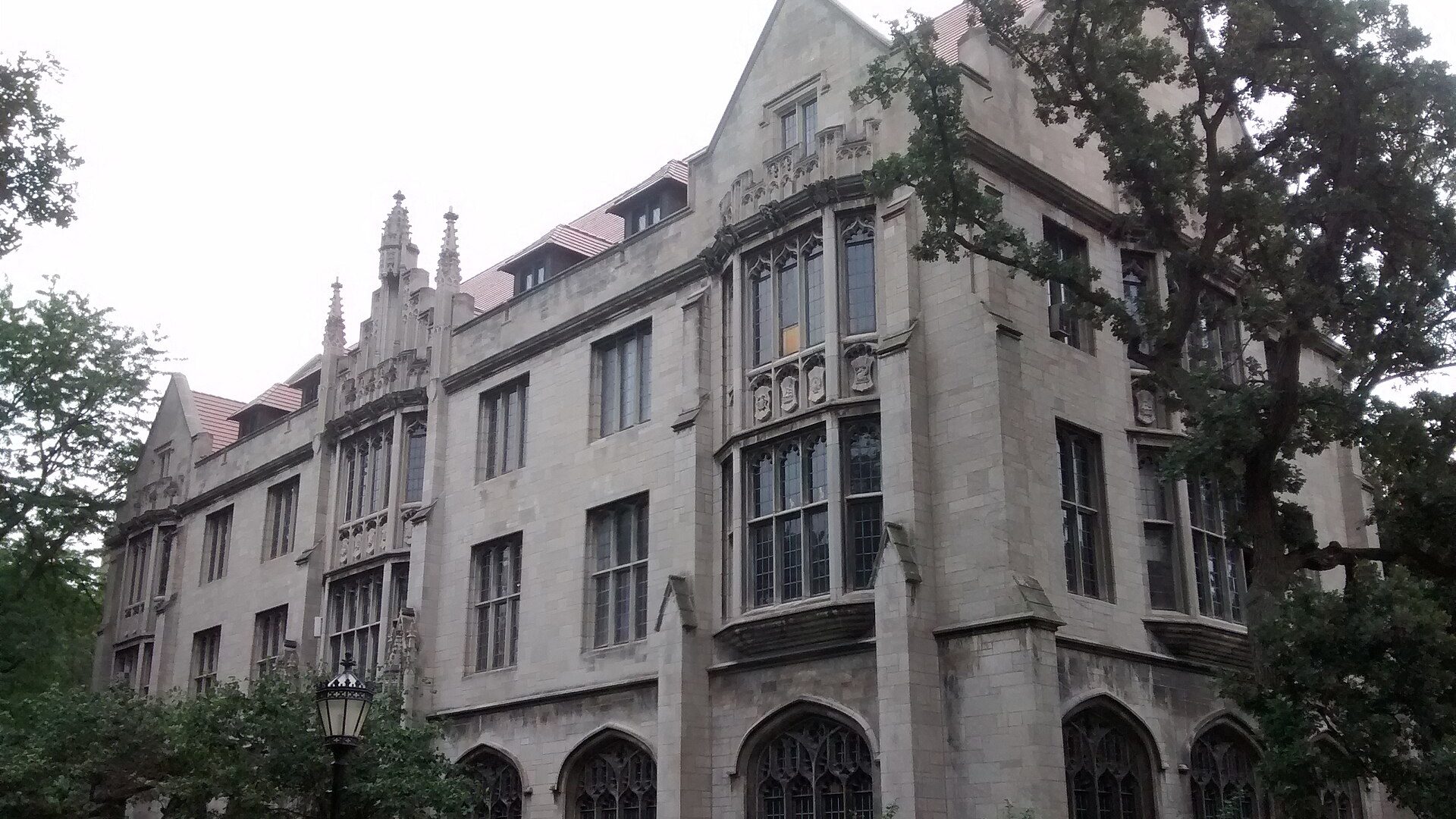
On May 21, 1991, in the middle of a crowded book sale, a professor of religion was executed with a single small-caliber shot inside the Divinity School of the University of Chicago. People heard it, and went back to work.
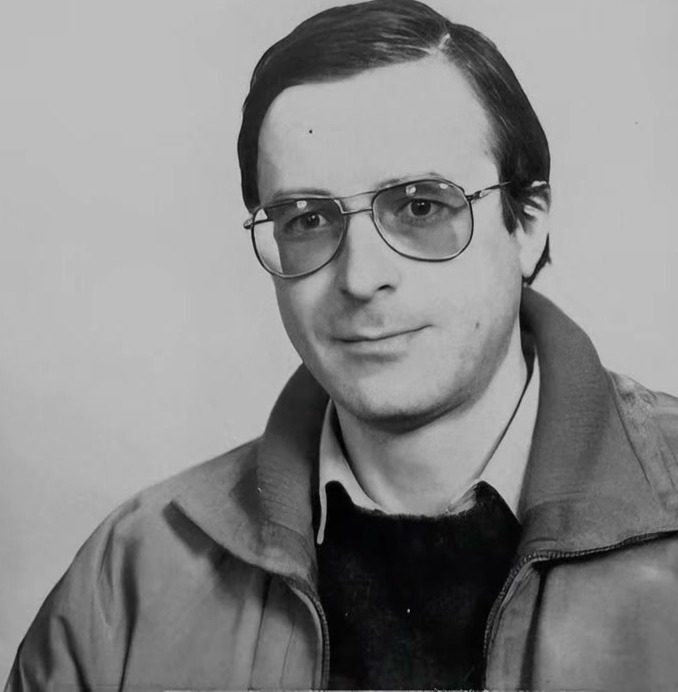
You stole twenty years of my life. I pretended for too long that I did not hear you. Now is the time when you must hear me. And I am going to speak whether you like it or not, often and louder.
Ioan Petru Culianu, answering President Iliescu in his Lumea Libera column, 1990
Swift Hall, University of Chicago. Mx. Granger, CC0 (source)
The film
At a glance
- Period
- 1950 to 2025
- Countries
- United States, Romania, Italy, Netherlands, France
- Subject
- Ioan Petru Culianu, historian of religions at the University of Chicago
- Key locations
- Chicago, Iași, Bucharest, Latina, Milan, Groningen, Paris, New York
- Themes
- true crime, cold case, unsolved, ioan petru culianu, mircea eliade, securitate
- Status
- An open, unsolved homicide with the Chicago police. Thirty-five years after the murder no one has ever been charged. Status as the episode left it, 8 August 2026.
- Episode
- EF-013 · 49 min · published 8 August 2026
Case overview
The victim was Ioan Petru Culianu, Mircea Eliade's chosen heir: a scholar of Renaissance magic who read fortunes that came true, and the fiercest critic of post-communist Romania writing in the exile press. The killer stood on the toilet seat of the next stall, fired once, and walked out past hundreds of people. The gun was never found. No one has ever been charged.
This is the full case: the boy from Iasi shadowed by an officer who called himself Captain Ear; the 1972 defection and the refugee camps the Securitate watched even there; the rise at Eliade's side in Chicago; the column and the interview Bucharest could not forgive; a six-week countdown of threats, break-ins, and a sheaf of papers handed to a near stranger; the fingerprints on the stall partition and the face in the elevator that was never identified; the disinformation that followed from Romania within days; and the documents that keep surfacing, thirty-five years on.
A ladder of threats that fits his final months rung for rung, and a bullet too small and too strange for any professional. A government that lied about the case within days, and a spy service too broken, its own veterans insist, to have reached him at all. A fascist old guard that gloated in print and denied everything on the record. A folder of his mentor's secrets, handed to a near stranger in his last week, and a widow's quiet verdict over his coffin. And a man with heavy glasses and a canvas bag, staring at a plaque outside a men's room, who has never existed anywhere since.
Timeline
Ioan Petru Culianu was born in the city of Iasi on January 5, 1950, into a family that had helped build Romania itself. His great-grandfather had led the university there, and so had his grandfather. In the yard of the family house on Saint Athanasius Street stood a towering walnut tree, planted by that great-grandfather a lifetime before.
By the time Ioan was born, that world had been confiscated. The Communist state seized the family homes and confined the survivors to four rooms that smelled, as Culianu later wrote, of decomposing upholstery. His father, an opposition lawyer who refused the new order, could no longer publish or hold a position. He faded inside his own house and died a broken man. The boy was forbidden to play with other children. So he played alone, in the walled garden, under the walnut tree.
Related documentsAround 1969, when Culianu was a top student of literature in Bucharest, the second kind of attention arrived. A man summoned him to an empty classroom and introduced himself as an officer of the Council of State Security, the Securitate. His name, he said, was Captain Ureche. In Romanian, the word means ear. Captain Ear, of the secret police.
Years later, in a sworn statement to American immigration officials, Culianu described what came next. The captain walked him through the city to secret meeting places. We took many detours to get to the location, Culianu wrote, walking through many alleyways. In apartments across Bucharest, Captain Ear asked pointed questions about Culianu's friends, and dangled a future in exchange. Cooperate, inform, and the doors of a career would open.
Related documentsOn July 4, 1972, Ioan Culianu walked away from his student group in Italy and asked for political asylum. He was twenty-two. He had a suitcase, a scholar's Italian, and no way back. The road for people like him ran through refugee camps, first near Trieste, then at Latina, south of Rome. Barracks, bunks, questionnaires, and waiting.
The waiting nearly killed him. Hungry, cold, and cut off from everyone he loved, he sank so deep that one night, with the old knife his father had left him, he tried to end his own life. He survived by accident and woke the next morning strangely calm. He told almost no one. For the next ten years, in every photograph taken of him in short sleeves, Culianu wears sweatbands on both forearms.
Related documentsWhat pulled him out was work, and a name. From exile, Culianu wrote to the most famous Romanian alive, Mircea Eliade, the University of Chicago professor who had turned the history of religions into an American academic empire. Eliade wrote back. A correspondence began that would decide the rest of Culianu's life, in more ways than either man could know.
The climb that followed was relentless. A doctorate in Milan, on gnosticism. A teaching post at Groningen, in the Netherlands, where a short first marriage came and went. Two more doctorates in Paris, at the Sorbonne. Books in four languages, on magic, on ecstasy, on journeys to the world of the dead. By his thirties he was working in eight languages, and colleagues from Umberto Eco to Harold Bloom knew his name.
Related documentsThe Securitate, it turned out, was watching even his despair. A file had been opened on him the moment he fled, and it was filling with reports. An informer sent into the Latina camp described the starving young scholar as a dangerous enemy of the regime.
The police intercepted his letters home and copied them into the file, including one from March 1973 with a line that reads today like an inventory of his whole situation. I live rather isolated from people, he wrote. The state that had driven him out was reading his loneliness in real time.
Related documentsIn 1986, the letters finally became a life. Culianu arrived at the University of Chicago, at the side of his mentor. He arrived just in time to bury him. Eliade died that April, and mourners, Saul Bellow among them, packed Rockefeller Chapel for the memorial.
When the will was read, Culianu learned that the old man had left him one final task: to serve as literary executor, keeper of the unpublished papers. The empire had a crown prince. Some of the mourners would never forgive him for it. In 1986, on the university quad, he met a Harvard doctoral student named Hillary Wiesner. She became his fiancee and his co-author, and the object of what she later called a kind of religion focused on me.
Related documentsCulianu had already written the fire. Through the late 1980s he published political fantasy stories about a country called Jormania, a dictatorship of the secret police run by a president and his wife. In one story, published in Italy months before anyone believed Ceausescu could fall, a rebellion sweeps Jormania.
In another, a coup arrives dressed as a genuine revolution. Factions of the secret police battle for power, and the winners dig up corpses, film them, and pass the dead off as victims of the old regime, to inflate the body count and confuse the world.
Then the Romanian revolution happened on live television, and it happened the way he had written it. Ceausescu and his wife were shot after a drumhead trial. The men who replaced him were, to a striking degree, the men who had served him.
And at Timisoara, bodies dug up from a paupers' cemetery were shown to the world's cameras as massacre victims, a deception an American network investigation later took apart. Fiction had beaten the news by months. Culianu had a name for the genre, borrowed from Italian: fantapolitics. The truth, he liked to say, is usually very close to the most fantastic hypothesis.
Through 1990, Culianu wrote a column for Lumea Libera, a Romanian exile weekly in New York, under the title Scoptophilia, the guilty pleasure of watching lurid things. He wrote more than thirty pieces in his last fifteen months, and carried the argument into the Italian daily Corriere della Sera and onto Radio Free Europe and the BBC, where his broadcasts ran so hot that the BBC asked him to tone them down.
The answers came by mail. At his fiancee's apartment one summer day, Wiesner handed him a letter forwarded from the newspaper, addressed in Romanian. He read it and threw it away, saying nothing. Another arrived the following week. That one he threw away unopened. To his friend Dorin Tudoran, a dissident poet in Washington, he admitted what the letters and the late-night phone calls contained. They said they would kill him if he kept writing about Romania, Tudoran later recalled. First he was amused. Then he became frightened.
Related documentsOn December 2, 1990, in his favorite Hyde Park restaurant, Culianu had sat down with the visiting Romanian writer Gabriela Adamesteanu for a long interview.
The cassette traveled home ahead of print, to his mother and sister in Iasi, who had not seen his face since 1986.
Related documentsOn December 22, 1990, one year to the week after the revolution, the column stopped. Culianu signed off with a farewell piece titled Adio. He told his readers the column had run its course, and he summed up its one permanent subject: now and forever, the shortcomings of Romania.
His countrymen would later tell the ending differently, as the week the threats won. Both stories can live in the same man. He was finished shouting weekly. He was not finished talking.
Related documentsIn April 1991 he hosted Romania's exiled King Michael at the University of Chicago, and concluded publicly that the old king was the country's best hope for stability.
To the new men in Bucharest, and to the far right in exile, the professor was now standing inside both of their nightmares.
On April 5, 1991, the Bucharest magazine 22 published the conversation, and Romania got to read, inside its own borders, exactly what its most brilliant exile thought of it. The stupidity of the Romanian Securitate is epochal, he said, of a depth never seen before. The revolution had been a tragic waste, dictated, he argued, by the KGB. Its chief beneficiaries were newly free fascists.
Even the country's loudest new nationalist weekly got a line it would not forget: if it had been a revolution, he said, Romania Mare would not exist. His friend Vladimir Tismaneanu called the interview the most devastating indictment of the new union of far left and far right in Romania. Ion Pacepa read the same pages with different eyes. His verdict on the interview was five words long. It was his death sentence, he said.
Related documentsIn early May, at a science-fiction convention outside Chicago, he read aloud from a new story written with Hillary, The Language of Creation. It is about a forty-year-old historian at a grey and renowned Midwestern university who comes to possess a music box holding the language God spoke at the creation. Its three previous owners were all murdered.
Around May 12, Hillary photographed him at home for the jacket of his next book. When the film came back, every frame of him was double-exposed, his face layered over itself. She blamed the camera, and remembered it for the rest of her life. The next day she flew home to Boston. Their wedding was set for the end of the summer.
Three days before the end, the corridor went dark. Culianu telephoned his sister and cancelled the trip home he had finally dared to plan, his first in nineteen years, the trip meant to carry him to their ailing mother and to a conference in Bucharest. He told me he feared the right wing, his sister said. He had new locks installed and bought a canister of Mace, because, as an FBI report later put it, he had fears for his personal safety.
And in that same week he did the strangest thing of all. He walked into the office of a colleague he barely knew, a scholar named Mark Krupnick, handed him a sheaf of papers, and asked him to keep them safe. Krupnick did not understand the request. He put the folder in a drawer. It would take thirty-three years for the world to learn what was in it. On May 16 and 17, Culianu hosted the conference he had built his spring around. Its title reads today like a stage direction: Other Realms. Death, Ecstasy, and Otherworldly Journeys in Recent Scholarship.
Related documentsOn the morning of May 21, 1991, Swift Hall was full of people. Students carried boxes through the lobby. Professors drifted between tables of secondhand theology, looking for bargains. A few minutes after one o'clock, a sound cracked through the third floor. In one office, a secretary looked up from her typing and asked if anyone else had heard it. A car backfiring, said one of her colleagues. Another disagreed. It sounded like a firecracker, she said. Only more high-pitched.
In a corner office nearby, a professor named Jerald Brauer heard the same sharp pop and ran through the possibilities in his head. A car? No. The road was too far away. A gunshot? No. That could not be. This was Swift Hall, at one o'clock in the afternoon. Everyone went back to work. About five minutes later, Brauer walked up to the third-floor men's room. A tall student he did not recognize stood in front of the door and grabbed his arm. Do not go in, Professor Brauer.
Related documentsThe crime scene lasted about half an hour, and then it was gone. Paramedics and campus officers, hoping the man could still be saved, moved the body before photographs were taken. Students and staff were herded together into waiting rooms, where their memories blurred into one another before detectives could hear them separately. By the time homicide detectives Ellen Weiss and Al McGuire arrived, thirty-five minutes after the first call, half the building had walked across the third floor.
The bullet was a .25 caliber round from a small pistol, which investigators came to believe was a Beretta, fired downward into the back of the head from at least eighteen inches away. Whoever fired it had climbed onto the toilet seat of the neighboring stall and waited there, balanced, above a crowded building's lunchtime traffic. On the top edge of that partition, exactly where such a shooter would have steadied a hand, technicians lifted a clear set of fingerprints. They matched no student, no professor, no janitor, no one with any business in Swift Hall. They have never been matched to anyone.
Related documentsA secretary named Judy Lawrence gave the investigation its only face. Minutes before the shot, she had stepped into the Swift Hall elevator and found a man already inside. Tall, heavy glasses, a light-blue canvas tote bag, and a stare that frightened her so badly she got out.
He looked almost like a religious fanatic, she said. He had pressed the buttons for the third floor and the fourth. Minutes later she saw him again on the third floor, standing still, staring at a plaque on the wall, the tote bag hanging from his hand. From her description the FBI drew a composite sketch. The man in it has never been identified.
Related documentsOn June 7, 1991, seventeen days after the murder, President Ion Iliescu told a press conference that a high American official had assured him the killing was not political. The State Department's East Europe experts knew of no such assurance. Three days later the government-aligned paper Libertatea printed what it said was a Chicago police report concluding that no foreign intelligence service was involved. The Chicago police had issued no report at all.
Exactly one month after the killing, Radio Bucharest aired a report that aimed lower. Culianu, it claimed, had been investigating a secret Legionnaire organization in America called the Sons of Avram Iancu. Then it turned to the grieving fiancee. Hillary Wiesner, the broadcast told Romania, had carried three bags of unknown content out of the professor's apartment, and stood to collect his life insurance, one hundred and fifty thousand dollars. The truth about the insurance was simpler and sadder, and it reached the New York Times through Wiesner herself: in his frightened final weeks, Culianu had changed his locks and bought a life insurance policy.
In February 1992, in the pages of Romania Mare, the nationalist weekly Culianu had said could not exist after a real revolution, a signed article celebrated his murder. The author was Leonard Gavriliu, the man who had translated Freud into Romanian.
Culianu, he wrote, had died on a lethal toilet prepared for him as if by destiny, and not enough water had been flushed over him. A scholar had been shot through the head in a bathroom, and a translator of Freud reached for a plumbing joke. Whoever pulled the trigger, the celebration ran in print, under a byline, in Bucharest.
In October 1995, the composite sketch of the man from the elevator finally ran in a Bucharest daily and in Culianu's old exile paper, beside a reward offered by his sister and brother-in-law: sixty million lei, about twenty thousand dollars. No one has ever claimed it.
Two years later, Romanian papers reported that the FBI had told a visiting Romanian interior minister, in plain terms, that Culianu's assassin was in Romania, and that Washington was waiting for Bucharest to produce him. Bucharest never did. In 2006, by the same accounts, the Bureau handed the file back to the Chicago police, where it remains today: an open, unsolved homicide.
Related documentsSix years after the murder, Umberto Eco, who had traded letters with Culianu and admired him, weighed the case in the New York Review of Books. And he reached for something a Securitate colonel had once described: the service's standard procedure for a writer who would not be quiet. Letters first, then telephone calls, then a break-in or personal visit. Then, if the writer did not stop, he was killed.
The letters, thrown away unopened at his fiancee's kitchen table. The telephone calls that turned his amusement into fear. The break-in: his Hyde Park apartment ransacked in November 1989, a Chicago police report listing a television, a computer, floppy disks, and some bottles of wine. Eco stated his conclusion with a shrug that has hung over the case ever since: it seems clear who must have been responsible for the murder, though nothing can be proved.
Krupnick died in 2003. Before he did, he passed the papers, still barely examined, to a younger colleague, the historian of religions Bruce Lincoln, with a puzzled confession: he had never understood why Culianu chose him, of all people.
The two men had hardly known each other. His best guess was almost too pointed to say aloud. Krupnick was a Jewish scholar, a specialist in Jewish memory. Perhaps, he thought, that was precisely the point. Because inside the folder were English translations of articles Mircea Eliade had published in Romania's far-right newspapers in the late 1930s.
Related documentsLincoln learned Romanian, hunted down the original articles, retranslated every one, and wrote a book he calls an attempt to atone for my lapses. In it he weighed the theories of the murder and found the state-assassin script wanting, for Lovinescu's reasons.
And then he looked hard at the wound closest to home. The day after the murder, Christinel Eliade kept a scheduled meeting with a University of Chicago Press editor named David Brent. She asked Brent to take over as her husband's literary executor, the role Eliade's will had marked for Culianu. About the dead man, she offered one remark. I never really liked him, she said. Lincoln himself writes that no evidence connects the widow to the crime, and that this idea, like every other in the case, remains an idea and nothing more.
Related documentsIn Bucharest, the Securitate's archive eventually opened, and researchers found Culianu's surveillance file, started the moment he fled in 1972, thick with informers' reports from the Latina camp and from Groningen, its pages censored, renumbered, and incomplete. Inside it, decades later, researchers identified the man who had called himself Captain Ureche. He was Marian Ureche, and he had risen to general, running an intelligence service of his own into the 2000s. Tracked down by a documentary crew in 2025, at a gas station, the old general denied ever trying to recruit Ioan Culianu.
In 2025, a Romanian forensic artist aged the FBI sketch by three decades for a television documentary, producing the face of a quiet old man, a face built, the artist said, to hold a neutral social profile, hard to notice. The same film carried something no one had ever seen: Culianu's sister, Tereza, on camera for the first time, six hours of testimony after thirty-four years of silence. The archive keeps producing. Only the stall stays silent.
Related documents
Key locations
Full mapDocuments and evidence
Sources
- Book
Eros, Magic, and the Murder of Professor Culianu Northwestern University Press, Evanston, 1996.
And yet the same small caliber had one more constituency. It was, Ted Anton reports, a weapon favored in Chicago's Romanian underworld.
- Book
Secrets, Lies, and Consequences Oxford University Press, 2024.
Because inside the folder were English translations of articles Mircea Eliade had published in Romania's far-right newspapers in the late 1930s. Most of them, Lincoln writes, voiced support for the Legion of the Archangel Michael, the Iron Guard, Romania's mystical and violently antisemitic brand of fascism.
- Archive
FBI Records: The Vault, the Ioan Culianu file Federal Bureau of Investigation.
The FBI eventually released more than a thousand pages of its Culianu file, black with redactions, crowded with dead ends.
- Web
Murder in Chicago The New York Review of Books, 10 April 1997.
Six years after the murder, Umberto Eco, who had traded letters with Culianu and admired him, weighed the case in the New York Review of Books.
- Web
The Killing of Professor Culianu Lingua Franca, volume 2, number 6, September and October 1992.
The article Ted Anton expanded into the 1996 book; the case's verbatim source for the Chicago reporting of 1991 and 1992.
- Newspaper
Scholar's Death Remains a Mystery The New York Times, 17 January 1993.
The truth about the insurance was simpler and sadder, and it reached the New York Times through Wiesner herself: in his frightened final weeks, Culianu had changed his locks and bought a life insurance policy.
- Newspaper
22, Bucharest: the interview of 5 April 1991 Grupul pentru Dialog Social, Bucharest, 5 April 1991.
On April 5, 1991, the Bucharest magazine 22 published the conversation, and Romania got to read, inside its own borders, exactly what its most brilliant exile thought of it.
- Newspaper
Lumea Libera, New York Library of Congress catalogue record; the paper survives on microfilm, 1990.
Through 1990, Culianu wrote a column for Lumea Libera, a Romanian exile weekly in New York, under the title Scoptophilia, the guilty pleasure of watching lurid things.
- Newspaper
Romania Mare: Leonard Gavriliu on the murder February 1992.
In February 1992, in the pages of Romania Mare, the nationalist weekly Culianu had said could not exist after a real revolution, a signed article celebrated his murder.
- Newspaper
Libertatea, Bucharest: the report that did not exist June 1991.
Three days later the government-aligned paper Libertatea printed what it said was a Chicago police report concluding that no foreign intelligence service was involved. The Chicago police had issued no report at all.
- Web
revista 22: Andrei Oisteanu on the murder, twenty years on revista 22, Bucharest.
It stays shut, as the Romanian scholar Andrei Oisteanu put it, behind seven locks.
- Web
The Cold Case of a University of Chicago Professor's Murder Chicago Magazine, September 2018.
The long American retelling of the investigation and its dead ends, used for the Chicago reporting of the case.
- Web
25 Years Later, Assassinated Professor Remembered The Chicago Maroon, May 2016.
Decades later one of those students, Greg Spinner, was still telling audiences: we were asked to perform them. Seriously.
- Documentary
Ioan Petru Culianu: Magul Culianu TVR Cultural.
The Romanian television documentary the episode's archival frames come from: the family album, the house in Iasi, and the sister's testimony.
- Documentary
Dean's Forum with Bruce Lincoln University of Chicago Divinity School, 2024.
Lincoln discussing the 2024 book inside the Divinity School; the source of the episode's Swift Hall interior frames.
- Web
The former acting chief of Romania's foreign intelligence service speaks FANATIK.
Decades later, a former acting chief of Romania's foreign intelligence service, Silviu Predoiu, added the institutional version: in May 1991 the apparatus was in disarray, in no state to mount a clean killing in America.
- Archive
The Ioan Petru Culianu Papers, University of Chicago Special Collections Research Center, University of Chicago Library.
The finding aid for Culianu's own papers, twenty one boxes of correspondence and manuscripts, checked by the case for photographs it does not hold.
What remains unresolved
- What do you believe happened in Swift Hall on May 21, 1991, and who was the man in the elevator?
- The ladder fits the timeline. The profile fits nothing.
- The file that might answer for it, the foreign intelligence service's own, has never opened.
Related files
 4 Men Who Never Arrived: The Strangest Disappearances of Eastern EuropeAlso in Bucharest
 Tortured Into Confessing: The Murder That Communist Romania Refused to SolveAlso in Bucharest
 Yugoslavia Sent a Hitman to Scotland. A Neighbour's Envelope Beat HimAlso in Paris
 The Man With the Hammer: The Serial Killer Communism Couldn't PunishAlso in Bucharest