Case fileEF-005Bucharest, 1977
Tortured Into Confessing: The Murder That Communist Romania Refused to Solve
In July 1977, an eighteen-year-old student named Anca Broscoțean traveled to Bucharest for a university entrance exam and never came home. Within days, packages containing her remains were found across the city.
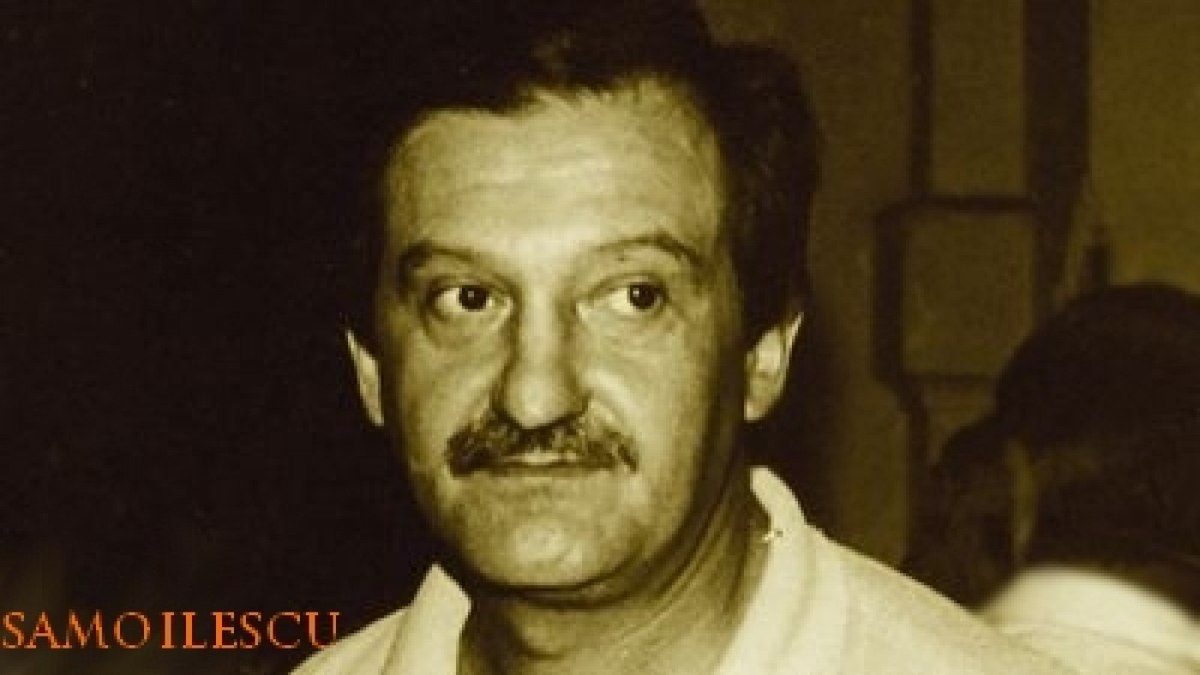
I have decided, categorically, to take the crime upon myself.
Gheorghe Samoilescu in September 1977, as the cell informer beside him wrote it down
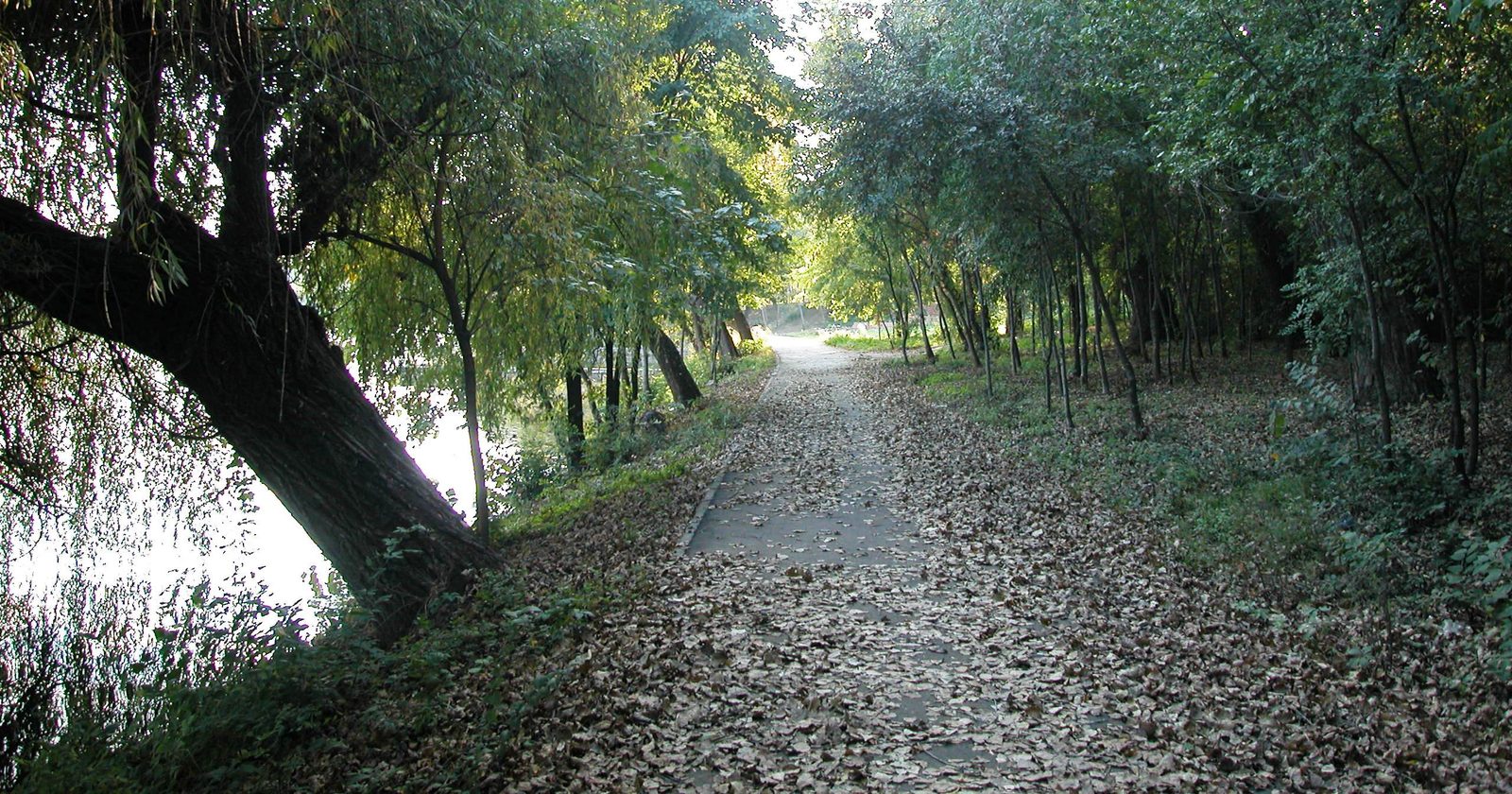
A path in Herăstrău Park. Eiva2001nl, via Wikimedia Commons, CC BY-SA 3.0 (source)
The film
At a glance
- Period
- 1977 to 2015
- Countries
- communist Romania (today Romania), Romania
- Subject
- Gheorghe Samoilescu, the Bucharest taxi driver convicted of Anca Broscotean's murder
- Key locations
- Bucharest, Sibiu, Târgoviște, Târgu Jiu, the Danube Black Sea Canal
- Themes
- Cazul Anca, Romania, communist Romania, true crime, wrongful conviction, Securitate
- Episode
- EF-005 · 33 min · published 20 June 2026
Case overview
Ceaușescu personally ordered a culprit found within days, and the Miliția delivered one: a taxi driver named Gheorghe Samoilescu, tortured for months until he confessed to a crime he did not commit, while every report that proved his innocence was hidden in a secret "house file." Three years later, neighbors complained about a smell in an apartment near the exam halls, and what investigators found there, including the victim's watch on the tenant's wife's wrist, unraveled everything. The real killer was the son of a Securitate colonel who had run the forced-labor camps of the Danube Black Sea Canal, an old prison comrade of the dictator himself. Known in Romania as "Cazul Anca," it is still taught in law schools as the country's greatest judicial error. The state's own secret files, published decades later, tell a darker story: it was never an error. This is that story, from the exam lists to the firing squad, and what the men who built the lie did when the truth arrived.
The truth surfaced the way truth tends to in that part of the world: in layers, each one a little too late. A newspaper printed the secret report in 1996. The full Securitate note, with its facsimiles, reached the public in 2010. A film called Examen, drawn from the case, played in cinemas in 2003, and law students in Romania still study the file as the greatest judicial error in the country's history. The journalists who finally published the pages used a different word for it. An error is something a system commits against its will. This had been built, signed, defended, and then hidden, by men who knew. Anca Broscotean would be approaching seventy now, a Sibiu woman with grandchildren and a story about the summer she almost studied economics. She is buried in her city. Among the things recovered that November in the flat on Caderea Bastiliei was a small ladies' watch that had kept time through all of it, a photograph of a young man inside, the last thing she carried that was entirely hers.
Timeline
Romca Cozmici's father was Colonel Eftimie Cozmici of the Securitate.
Born in 1910 in a Danube town, three grades of school, a baker's apprentice who joined the communist underground, he had spent the war years in the Targu-Jiu internment camp alongside the future masters of Romania, Gheorghe Gheorghiu-Dej and Nicolae Ceausescu.
Related documentsIn 1951 Eftimie Cozmici was given command over the forced labor camps of the Danube Black Sea Canal, a project remembered in Romania as the graveyard of the bourgeoisie.
The party rewarded its old cellmates. Press investigations decades later counted more than a hundred and seventy prisoners dead under his command, starvation rations, barbed wire fixed inside the cells, extra hours of labor without food for missed quotas.
Related documentsOn the fourth of March, an earthquake had torn through southern Romania and brought whole blocks of central Bucharest down into the streets, killing around fifteen hundred people.
Four months later the rubble was still being cleared. The regime had thrown everything into projecting recovery, order, control. And it was into that bruised, watchful city that the packages began to surface.
Related documentsOn the afternoon of July the sixth, a little after two o'clock, Anca Broscotean left her aunt's house to go and read the lists that assigned each candidate to an examination hall.
It was an errand of an hour, in a city she did not know well, in the middle of a hot summer. She did not come back that evening. She did not come back at all. By the next morning her aunt was at the Militia, the people's police, reporting an eighteen-year-old girl missing in Bucharest.
Related documentsOn the eighth of July, in Herastrau Park, the great green park of the north of the city, a package wrapped in plastic was found to contain two human hands. Over the next four days there were more. Six packages in all, left in parks, public places and toilets across Bucharest.
A pelvis near the Arch of Triumph. The last package, found in a public toilet behind Coltea Hospital, contained the head. The forensic doctors pieced together a young woman, dead within hours of the afternoon of July the sixth: assaulted, strangled with a cable, her airway stopped. The missing persons file from Traian street gave her a name. On the plastic wrapping of one package, technicians lifted a single fingerprint that belonged to no one in the files. It was photographed, logged, and set aside.
Related documentsThe order arrived from the very top. Nicolae Ceausescu personally demanded the case be closed, and closed fast. Accounts of the file describe the instruction in plain numbers: a culprit within ten days.
Not the culprit. A culprit. Perhaps the distinction was invisible from the height of the Central Committee. On the ground, in the offices of the Bucharest Militia, it would become the entire story.
Related documentsGheorghe Samoilescu was twenty-six, born in Targoviste, a taxi driver in the capital. When the Militia came for him on the fifteenth of July, he admitted all of it at once. Knowing her. The tram. The chain. Everything except the thing that mattered.
A year earlier he had met Anca on the number twenty-six tram, introduced himself as Sami, and tried his luck. She had taken his number politely, the way young women manage unwanted admirers. In the spring of 1977 a gold chain of hers had ended up in his hands, a pledge he had somehow never returned.
Related documentsOn the twenty-first of July a warrant was finally signed. It did not say murder. It said theft.
And with the paperwork settled, the file with Anca's name on it stopped being an investigation in any sense you would recognize, and became a production line. Its product was a confession, and it would run for six months.
Related documentsThe regime that interrogated Gheorghe Samoilescu kept records, and because of those records we know how it was done. Sixteen hours of questioning a day, with four hours of sleep, the rest periods granted by written permission of a general.
There was a method the interrogators called the rotisserie: a man handcuffed around his knees, an iron bar slid behind them, the bar hung between two desks, the body rotating slowly while the blows came from every side, so that he could never brace for where the next one would land. There was an older method, the macavela: hands tied behind the back, the body hoisted by the wrists until the weight tears the shoulders from their sockets. He was driven out of the city at night and beaten in a forest. When his hands turned black, they were set in plaster casts, and the questioning continued. A doctor attended the sessions. His role was not to treat the prisoner. It was to advise when the prisoner could take more.
Related documentsOn the twenty-third of August Gheorghe Samoilescu's wife Elisabeta was arrested, accused first of false testimony, then of complicity in murder, and held for eight and a half months. Their three children were placed in an orphanage.
A young woman who had told investigators that Samoilescu had been at her family's home that July afternoon was detained and questioned until she took it back. Another witness who confirmed the alibi was held for forty-eight days, and shown an arrest warrant whose charges carried the death penalty. Around the taxi driver, one statement at a time, the world that could have saved him was being dismantled.
Related documentsOn the twenty-first of September the informer beside Samoilescu reported him saying that he could not endure the investigation any longer, that he was physically and morally exhausted, and that he would have to admit to something, even an untruth. Six days later came the second note. I have decided, categorically, to take the crime upon myself.
He had worked out the only trade left to him: if he became the murderer they wanted, perhaps his wife would be released to their children. The men reading those reports understood exactly what they meant. The confession that followed was written down anyway, signed, and entered into evidence as the truth.
Related documentsSamoilescu's father, a retired officer being treated at the Military Hospital, had learned what his son stood accused of, that his boy was being called the worst criminal the country had produced since Rimaru. Two weeks later he hanged himself. The woman who had raised Gheorghe took her own life as well.
A note left behind read, I could no longer bear the terror. In the file, the investigators recorded the suicides of the suspect's parents and drew from them a conclusion: the family's shame was one more proof of his guilt.
In its first version, Samoilescu was made to say he had taken Anca to his parents' apartment on Christian Tell street, where she had fallen, struck her head, and died. Seven forensic teams went through that apartment with ultraviolet lamps, looking for what a dismemberment leaves behind. They found nothing.
So the confession was revised. A cell informer fed the prisoner details to make the next version more convincing, and in the new account the body had been cut up inside the small Fram refrigerator in the apartment. The examiners measured the refrigerator. What the confession described could not physically have been done inside it. Each version of the story collapsed on contact with the evidence, and each time, the solution was not to question the story. It was to stop asking.
Related documentsThe reports that said otherwise, the soil analysis that did not match, the fibers that did not match, the blood grouping that could not work, the vessel that proved to contain no blood at all, those were not destroyed. They were filed. They went into a second dossier that investigators kept beside the official one, a private archive of everything that contradicted the case.
The men who built it had a name for it. The house file. The court would never see it. Two hundred and fifty witnesses were questioned about the physical evidence, the bags the body had been wrapped in, the clothing, the cords. More than two hundred of them said the things being attributed to the Samoilescu family were nothing they had ever seen. A psychological profile was entered against the accused declaring him a sexual aberrant, a marginal psychopath. The specialist who signed it had never once examined him.
Related documentsOne veteran investigator, a colonel named Ceacanica, had been running the only line of inquiry built on what the crime itself suggested: that the killer was a man with a profound mental disturbance. His team had been screening hundreds of such men across the city, four hundred names, one by one. On the nineteenth of December 1977, that line of inquiry was ordered closed.
The case already had its man. The screening stopped, and somewhere in the city, the man it had been built to find went on with his life. Two colonels assembled a documentary file concluding the evidence did not hold, and sent it up the chain, where it stopped moving and was never seen again.
On the thirtieth of September 1978, the Bucharest Tribunal, under judge Constanta Stoia, convicted Gheorghe Samoilescu of murder, rape, theft and desecration of a corpse: twenty-five years. In February 1979 the Supreme Tribunal made it final.
Samoilescu was twenty-eight when the gates closed on him. His wife had been released from her own cell into a dismantled life. His children were in state care. His father and the woman who raised him were dead. The chain of small kindnesses that holds anyone's life together, neighbors, colleagues, family, had been interrogated, threatened or arrested until it let go of him.
Related documentsThe militiamen who entered the small flat on the twenty-seventh of November 1980 found the scene where this story began: the remains of a young woman, in the refrigerator and in a vessel sealed with plaster. She had a name, Marcela Mihai, twenty-eight years old, a worker at the radio components plant in Baneasa, last seen alive on the twenty-third of April.
The tenant was Romca Cozmici, twenty-five, an unskilled laborer at a marble works who told people he was a painter. He had a record: small thefts, an attempt to slip across the border. He was arrested where he stood.
Related documentsFacing the deputy chief of the Bucharest Militia, Colonel Corneliu Diamandescu, Cozmici volunteered something no one had asked him about. Colonel, he said, I know I am going to the bullet. But because you have been a gentleman with me, I want to tell you. Anca. I killed her too.
The fingerprint lifted from the plastic wrapping in July 1977 matched his hand. Anca's earrings had been sold to a buyer who remembered him. Her shoes were in his apartment. The wrappings around the packages had been cut from his own parents' clothing. And on the wrist of his wife was a small ladies' watch with a photograph fitted inside the case: a young man from Sibiu, waiting where Anca had left him, three years on the wrist of her killer's wife.
Related documentsIn January 1981, as word of Cozmici's confession moved through the apparatus, the Securitate's Sixth Directorate, the service's own criminal investigations branch, grasped what Samoilescu now was: living proof of what the Militia and the prosecutors had done.
By that account, a team was sent urgently to his prison, and reached him one hour before a different set of visitors arrived, militiamen sent, the account says, to make sure the file's only victim never walked out to tell anyone. A quiet cell death would have closed the case forever. He missed it by sixty minutes.
Related documentsOn the twenty-third of January 1981 Samoilescu's sentence was suspended and the gates opened. That June, the Supreme Court quashed the conviction. Every charge was dropped except one: abuse of trust, for the gold chain, and even that was extinguished under an amnesty, so that no court ever pronounced the word innocent over Gheorghe Samoilescu.
For three years and eight months of his life, the state paid him seventy thousand lei. Then it deducted thirty thousand for his food and lodging in prison. It billed him for the cell.
Related documentsInside the Securitate, the Sixth Directorate wrote it all down: an internal note, page after page. The sixteen-hour days, the staged identifications, the house file, the buried reports. It is all there, in the state's own hand, with the names of the generals, the prosecutors and the judge, and a list of proposed dismissals, demotions and prosecutions.
The note went up to the leadership of the party, to the desk of Nicolae Ceausescu. The proposals came back refused. A few men were moved sideways into quiet postings. Not one was tried. The note itself was classified, and went into the dark for thirty years.
Related documentsThe truth surfaced the way truth tends to in that part of the world: in layers, each one a little too late. A newspaper printed the secret report in 1996. The full Securitate note, with its facsimiles, reached the public in 2010.
The journalists who finally published the pages used a different word for it. An error is something a system commits against its will. This had been built, signed, defended, and then hidden, by men who knew.
Related documentsGheorghe Samoilescu lived another twenty-four years, with broken health, in the same city as the men who had broken it. In 1997 he filed a criminal complaint naming his torturers. It went nowhere.
He died of lung cancer in 2005, legally a man whose case had simply been discontinued. His daughter took up the file.
Related documentsOf all the men named in the secret note, exactly one ever stood in a dock: Colonel Tudor Stanica, the case's feared chief investigator, convicted in 2003, not for Anca's file, but for a dissident beaten to death in his directorate's custody years later.
Ten years, of which he served a fraction. He outlived nearly everyone in this story.
Related documentsIn 2014 a Bucharest court looked at what had been done to Gheorghe Samoilescu and awarded the family half a million euros. A year later the appeals court cut the award to ten thousand, and the state's lawyers argued, successfully, that too much time had passed.
The same state had kept the proof locked in a safe for thirty years.
Key locations
Full mapDocuments and evidence
Sources
- Web
INSCENAREA "Cazul Anca": Nota Direcției a VI-a Lumea Justiției (luju.ro), 23 December 2010.
The full Securitate note, with its facsimiles, reached the public in 2010. The note itself was classified, and went into the dark for thirty years.
- Web
Raportul secret al col. Tudor Stănică Lumea Justiției (luju.ro), 24 December 1980.
One of the senior investigating officers later wrote that in those first days he proposed releasing Samoilescu and watching him, because the case against him would not hold.
- Web
CAZUL ANCA: 500.000 euro, the 2014 ruling Lumea Justiției (luju.ro), 2014.
In 2014 a Bucharest court looked at what had been done to her father and awarded the family half a million euros.
- Web
Adevarul: the case timeline, the interrogation and the quotations Adevarul (adevarul.ro).
The regime that interrogated Gheorghe Samoilescu kept records, and because of those records we know how it was done.
- Web
Gena de asasin Adevarul (adevarul.ro).
Press investigations decades later counted more than a hundred and seventy prisoners dead under his command, starvation rations, barbed wire fixed inside the cells, extra hours of labor without food for missed quotas.
- Web
Historia: the case Romania calls its greatest judicial error Historia (historia.ro).
Law students in Romania still study the file as the greatest judicial error in the country's history.
- Newspaper
Tribuna Sibiu.
The hometown paper of Sibiu: the family's funeral notice of July 1977, the watch with the photograph fitted inside it, the letterhead of the chief investigator's secret report, and the police photograph of Romca Cozmici.
- Newspaper
România Liberă 1996.
A newspaper printed the secret report in 1996.
- Web
Comentator: the luring, the confession versions and the arithmetic comentator.ro.
For three years and eight months of his life, the state paid him seventy thousand lei. Then it deducted thirty thousand for his food and lodging in prison.
- Web
Femeia tranșată și depozitată în cutii a șocat o Românie întreagă Evenimentul Zilei (evz.ro).
The militiamen who entered the small flat on the twenty-seventh of November 1980 found the scene where this story began.
- Web
Registry of Exonerations: the Gheorghe Samoilescu entry registryofexonerations.eu.
That June, the Supreme Court quashed the conviction.
- Web
Cazul Anca erori-judiciare.ro.
A Romanian aggregator of the documented judicial errors, used to cross check the dates of the case.
- Web
Cazul "Anca" Romanian Wikipedia.
And Romca later claimed one thing more: that on the afternoon Anca died, his father was in the apartment, in the next room.
- Web
aktual24: Tudor Stănică and the Gheorghe Ursu case aktual24.ro.
Ten years, of which he served a fraction. He outlived nearly everyone in this story.
- Archive
Gheorghe Ursu Foundation: the Stănică and Creangă file gh-ursu.ong.ro.
Not for Anca's file, but for a dissident beaten to death in his directorate's custody years later.
- Documentary
Examen ICON production; IMDb tt0217084, 2003.
A film called Examen, drawn from the case, played in cinemas in 2003.
- Archive
TVR archive reel: Bucharest street life in the 1970s Romanian Television archive, brief excerpts under commentary.
The episode's moving footage of the city, used for the streets, trams and traffic of the period.
- Archive
Newsreel of the earthquake of 4 March 1977, Bucharest Period newsreel compilation, brief excerpts under commentary.
On the fourth of March, an earthquake had torn through southern Romania and brought whole blocks of central Bucharest down into the streets, killing around fifteen hundred people.
What remains unresolved
- What does a state do when it discovers it has manufactured a murderer?
- When the screening for disturbed offenders was shut down in December 1977, was it haste, was it obedience, or was someone making sure no one ever looked toward the apartment on Caderea Bastiliei?
Related files
 The Vampire of Bucharest and the Murders His Father Got Away WithThe Rimaru terror of six years earlier is the panic the 1977 investigators worked under, and the detectives who broke that case were the ones ordered to close this one fast.
 The Culianu CaseAlso in Bucharest
 Murder at the Golden StagAlso in Bucharest
 The Communist Bank Robbery That May Never Have HappenedAlso in Bucharest