Case fileEF-001Bucharest, 1959
The Communist Bank Robbery That May Never Have Happened
In 1959, six former insiders of Romania's Communist regime were accused of the impossible: robbing the National Bank of Romania, in a state that insisted crime was a disease of the capitalist West. But the case had a strange flaw.
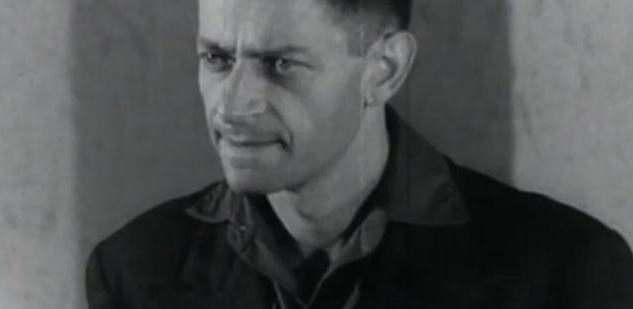
A documentary about a documentary of lies.
Alexandru Solomon on the 1960 reconstruction film, in the documentary he built around its footage
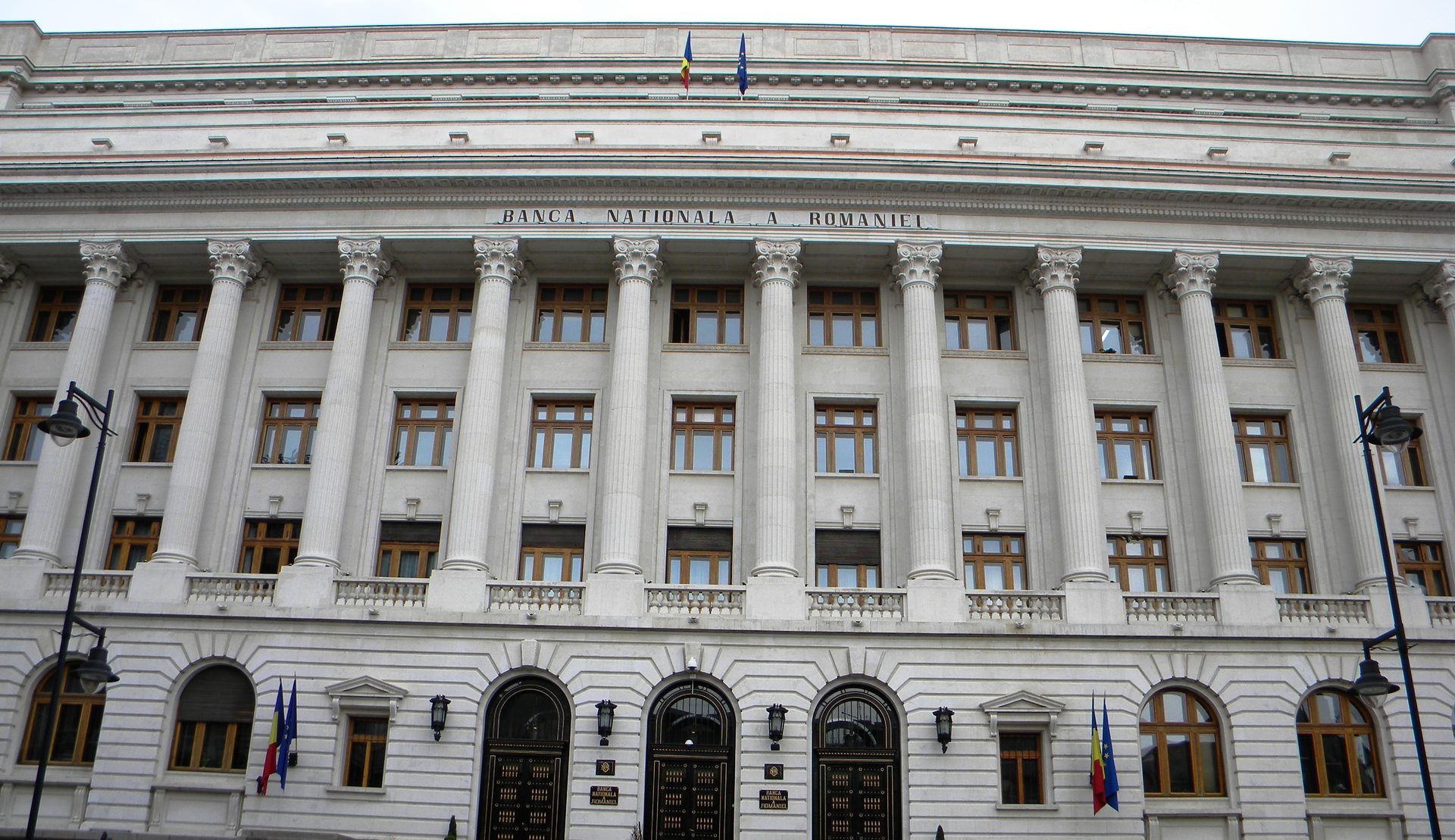
The National Bank of Romania, Bucharest. Britchi Mirela, CC BY-SA 3.0 Romania (source)
The film
At a glance
- Period
- 1959 to 2004
- Countries
- Communist Romania (today Romania), Israel
- Subject
- The six accused of the 1959 National Bank robbery in Bucharest
- Key locations
- Bucharest, Jilava, Israel
- Themes
- true crime, communist romania, ioanid gang, bank robbery, cold war, romania history
- Status
- Sixty years on, the file is still mostly sealed. Status as the episode left it, 8 June 2026.
- Episode
- EF-001 · 13 min · published 8 June 2026
Case overview
Before the accused were executed, the secret police forced them to re-enact the heist, step by step, for a propaganda film almost no one was meant to see. This is the story of the Ioanid Gang, and the question that still hangs over it: did it happen the way the state said it did, or was the whole thing staged?
Sixty years on, the file is still mostly sealed. The questions Solomon asked, and Lusztig asked, and the families still ask, have no clean answers, and maybe never will. What we're left with is the shape of what a regime does when it decides the truth is simply whatever it chooses to film.
Timeline
When the Soviets arrived in 1944 and the Party took power, people like them were rewarded. They rose.
Before the war, when belonging to the Communist Party could get you imprisoned, they had been the believers, the illegalists, the underground. Alexandru Ioanid, the man the state would brand the gang's leader, had been a lieutenant-colonel in the militia, once in charge of its legal directorate. His younger brother Paul taught at the Military Academy, with a doctorate from Moscow. Among the others: an aviation engineer, a historian who lectured at the University of Bucharest, a journalist for the Party's own newspaper, a radio editor. Educated, decorated, trusted. Every one of them, like the rest of the accused, was Jewish.
Related documentsBy 1959, being a Jewish veteran of the Party was no longer an asset. After Soviet troops withdrew in 1958, the regime began quietly purging its own: pushing Jewish and other minority officials out of the posts they had earned. These six were among them, one by one, between 1957 and 1959.
The accused ringleader, Alexandru Ioanid, was, by marriage, and not for much longer, the brother-in-law of the man whose secret police would arrest him: the Interior Minister, Alexandru Drăghici.
Related documentsSeveral of the accused, it turns out, were already under surveillance before the robbery, phones tapped, movements watched.
In one of the most controlled police states on earth, six monitored insiders nearly getting away with an armed bank robbery strains belief.
Related documentsThe story the state would tell goes like this. On a summer morning in late July 1959, a car belonging to the National Bank of the Romanian People's Republic was moving through Bucharest, carrying cash. As it passed through the Giulești district, it was ambushed. Five figures, four men and a woman, closed in, armed. In less than a minute they overpowered the bank's unarmed driver and his escort, seized the sacks of money, and were gone.
The take was just over one and a half million lei. In a planned economy where ordinary people almost never held real money, it was a staggering sum. The robbers scattered through the Ciurel district, regrouped, and split the cash at a flat in Cotroceni. No alarm caught them in time. No one was hurt.
Related documentsFor two months, the Securitate turned Bucharest inside out, thousands of people pulled in and interrogated.
Among them was a money collector for the bank named Gheorghe Năstase: entirely innocent, and, as it happened, the father of the boy who would grow up to be the tennis champion Ilie Năstase. He was beaten and held for months before a connection high in the Party finally got him out. By some accounts, another man, a bank cashier, was beaten to death in custody.
Related documentsThe confessions that finally "cracked" the case were drawn out by Gheorghe Enoiu, head of the Securitate's criminal investigations, remembered by those who survived his rooms as one of the regime's most practiced torturers.
In all of it, there is no fingerprint, no forensic trace, nothing physical at all tying these six to that street. The case that would put five of them in front of a firing squad rested, in the end, on confession. And a confession beaten out of a prisoner proves only one thing: what the man holding the truncheon wanted to hear.
Related documentsIn November 1959, the six were tried, behind closed doors, before a military tribunal: the kind of court a state reserves not for thieves, but for enemies.
Related documentsThe story the prosecution told kept changing. At various points the gang were said to have plotted to assassinate the Interior Minister himself, and the Party's chief ideologue, charges dramatic enough for a spy film, and quietly dropped before the verdict.
The motive shifted too: greed, then revenge for their downfall, then something stranger, that these were Jews stealing to fund emigration to Israel. That last accusation ran straight into a simple fact: the Romanian leu could not be exchanged for foreign currency. As a way to buy passage to a new country, the money was very nearly worthless.
Related documentsThe court was unmoved. Five of the six, the brothers Ioanid, Igor Sevianu, Sașa Mușat, and Haralambie Obedeanu, were sentenced to death. Only Monica Sevianu, the one woman, was spared: a mother of two, she was given life instead.
Related documentsOn the night of the 18th of February, 1960, the five men were shot at Jilava prison. Their families were not told.
Related documentsAfter the verdict, the state ordered a reconstruction, and made the condemned star in it. The six were brought out to perform their own crime for the camera: to re-enact the robbery, to sit through a staged confession, to play themselves.
The Securitate dressed one of their apartments with imported furniture and paintings it never held, to make these fallen Party men look like greedy bourgeois decadents. They were even handed invented professions, so the film would not have to admit what they really were.
Related documentsThe robbery: July 1959. The arrests: September. The trial: November. The executions: February 1960. The film was finished after that, which means that by the time it was done, five of the people on screen were already dead.
The state had made a movie starring corpses, and shown it not in cinemas but in special closed sessions for Party audiences across the country, then locked it in the archive.
Related documentsMonica Sevianu, the one who lived, was released, left for Israel, and died there in 1977.
Years later her own granddaughter, the filmmaker Irene Lusztig, would go searching for the truth of what happened to her family.
Related documentsDecades later, a Romanian filmmaker named Alexandru Solomon built his own documentary around that footage, and called it what it was: a documentary about a documentary of lies; a reconstruction that, in his words, conceals far more than it shows.
The men who built the case never answered for it. Alexandru Drăghici, the Interior Minister, died in comfortable exile, never tried. Gheorghe Enoiu, the interrogator, was referred for prosecution, and died before it could begin.
Related documents
Key locations
Full mapDocuments and evidence
Sources
- Documentary
Reconstituirea 1960.
In 1960, in a country where gangster films were banned, the secret police made one.
- Documentary
Marele jaf comunist (The Great Communist Bank Robbery) 2004.
Decades later, a Romanian filmmaker named Alexandru Solomon built his own documentary around that footage, and called it what it was: a documentary about a documentary of lies; a reconstruction that, in his words, conceals far more than it shows.
What remains unresolved
- Did it happen the way the state said it did, or was the whole thing staged?
- Why would six decorated insiders, people the Party had spent fifteen years rewarding, and was now in the middle of discarding, suddenly turn around and rob its bank?
Related files
 Murder at the Golden StagAlso in Bucharest
 The Vampire of Bucharest and the Murders His Father Got Away WithAlso in Bucharest
 Tortured Into Confessing: The Murder That Communist Romania Refused to SolveAlso in Bucharest
 The Man With the Hammer: The Serial Killer Communism Couldn't PunishAlso in Bucharest