Case fileEF-002Bucharest, 1970
The Vampire of Bucharest and the Murders His Father Got Away With
In 1970, a killer began hunting the streets of Bucharest, and he came only on the worst nights, in the storms and the freezing rain. For more than a year, a Communist state that insisted crime was a disease of the capitalist West refused to admit he existed.
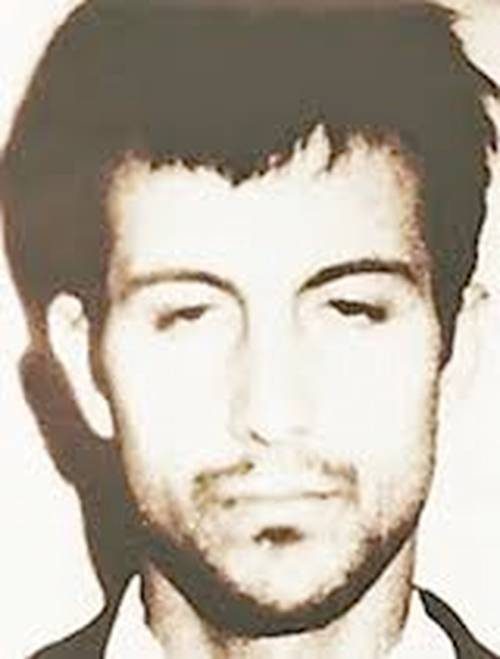
Vreau să trăiesc. I want to live.
Ion Rîmaru, the last words anyone wrote down, Jilava, 23 October 1971
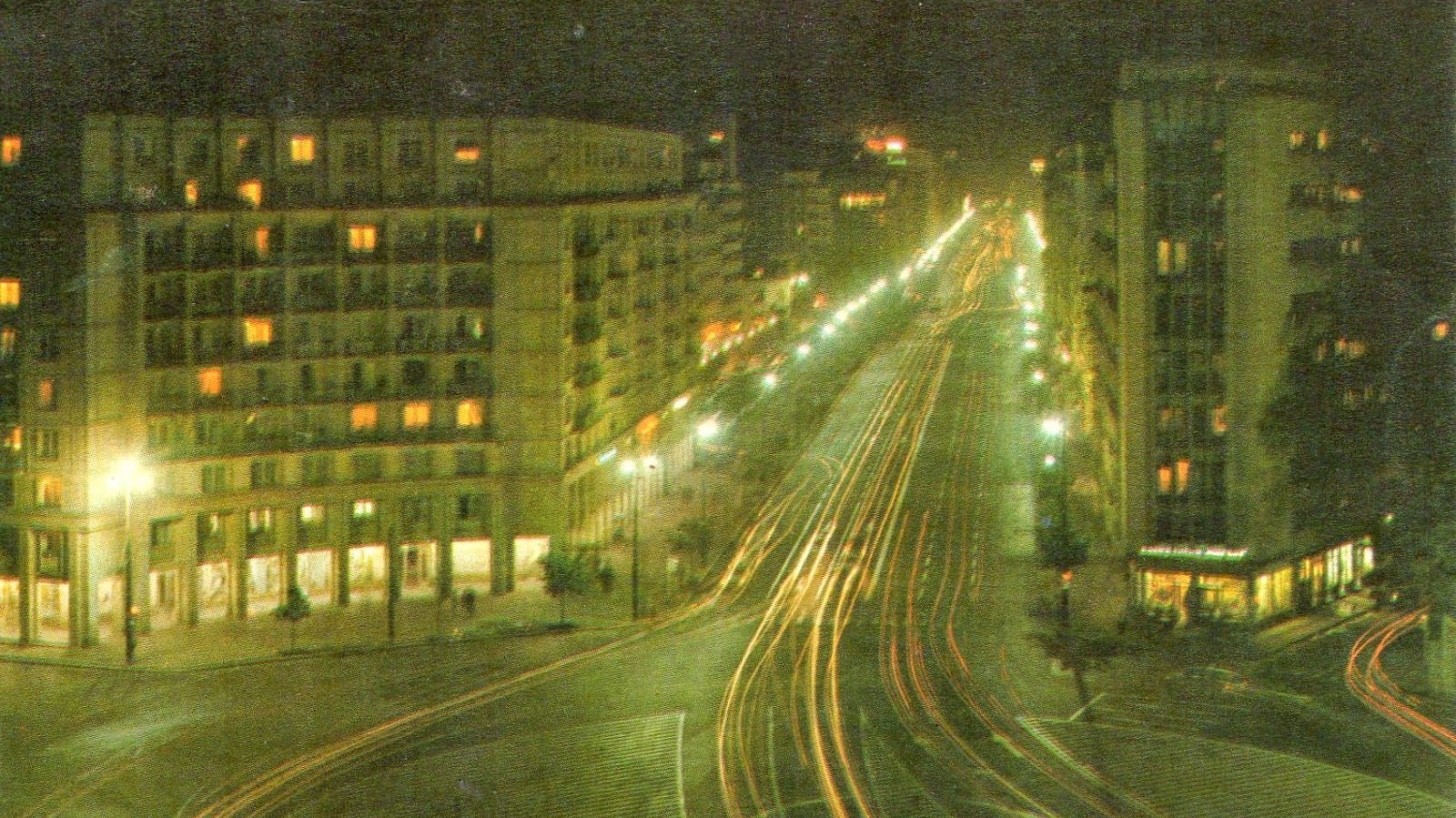
Piața Romană at night in the 1970s. Unknown photographer, via sanuuitam.blogspot.com and Wikimedia Commons, Public domain (Romanian photograph published before 1986) (source)
The film
At a glance
- Period
- 1944 to 1972
- Country
- communist Romania (today Romania)
- Subject
- Ion Rîmaru, a veterinary student in Bucharest, and his father Florea Rîmaru, a tram driver
- Key locations
- Bucharest, Jilava
- Themes
- true crime, ion rimaru, vampire of bucharest, vampirul din bucuresti, serial killer, communist romania
- Episode
- EF-002 · 14 min · published 8 June 2026
Case overview
This is the story of Ion Rîmaru, the man the city came to call the Vampire of Bucharest: how he was hunted, how a rain-soaked scrap of paper finally caught him, and the second truth the state buried even deeper, the one uncovered a year after his execution, from a single fingerprint on a morgue table.
What remains is only the shape of it. Two men, a generation apart, hunting women through the same city on the same kind of nights. And a state that managed, twice, to bury what had happened. In 1944, beneath the fog of a war. In 1971, beneath the fog of an idea, an idea that simply could not allow such a man to exist. The Vampire of Bucharest was never one man. He was two. And the second was only ever found by accident, by an old man who could not bring himself to let go of a fingerprint.
Timeline
In 1944, in the chaos of the war, a quarter of a century earlier, four women had been murdered in Bucharest. Women in ground-floor rooms, attacked at night, in storms, through their own windows, their heads beaten in.
The case had gone cold. The fingerprints left at the scenes had matched no living person on file.
Related documentsThe first to die, in the spring of 1970, was a woman named Elena Oprea. She was attacked in the dark, close to her own home. She was not the last.
Over the months that followed the same thing happened again, and again, and it was always the same shape. A woman alone, walking late. A night of terrible weather. And by morning, something that did not seem entirely the work of a man.
Related documentsHe came only after midnight, and he came only in the foulest weather the city had to offer. Driving rain. Snowstorms. Freezing fog.
The investigators would understand, far too late, that this was not chance. The storms were his accomplice. They swept the streets clean of witnesses, smothered every sound, and washed the evidence into the gutters.
Related documentsSo the details were withheld, the case kept quiet, and into that vacuum poured the one thing the regime feared almost as much as the killer himself. Rumor.
With no facts to hold onto, the city manufactured its own, and chief among them was the whisper that every woman he had killed was blonde.
The women of Bucharest sensed it before the authorities would breathe a word. They stopped going out alone after dark. They moved in groups, or on the arm of a man.
Fear did the work the newspapers would not, because the newspapers said nothing at all.
Related documentsThe rumor was false, but it is easy to see how it spread. Several of the murdered women were fair-haired, and so, in the mouth of a terrified city, he became "the killer of blondes." Women dyed their hair dark to feel safe.
He did not select them by the color of their hair. He selected them by opportunity, a woman alone, on a night when no one sane would be outside to see.
By the end, four women were dead. At least ten more had been attacked and had lived.
He used a hammer, a hatchet, a length of iron pipe. He bit them, of that the forensic examiners were certain. The investigators who worked the case would go further, and say that he drank their blood.
Related documentsThe turning point, for the investigation if not for the dead, came with the murder of a young waitress named Gheorghița Popa. She was killed on a street called Strada Vulturilor. The Street of the Vultures.
The enormous police operation that followed took its name from that street. They called it Operation Vulture.
It became the largest manhunt in the history of communist Romania. Thousands of officers were pushed onto the streets at night. Patrol cars, motorcycles, plainclothes men folded into doorways. More than two thousand people were stopped, questioned, detained, released.
And for month after month, it failed. He went on killing. The storms went on coming. The most watched city in the Eastern bloc could not find one student with a hatchet in a bag.
Related documentsBeneath the body of his last victim, a woman named Mihaela Ursu, killed in the first days of May 1971, the investigators found a medical note.
The rain had soaked it through and dissolved the name written on it. But the printed letterhead survived.
It led them to a clinic for university students, and to a single doctor's office, and to a diagnosis: suspected epilepsy. They gathered every such note the office had issued that spring. Eighty-three of them.
Then they looked for the students who had never come back to collect their files. Fifteen names remained. One of them belonged to a veterinary student called Ion Rîmaru.
Related documentsOn the twenty-seventh of May, 1971, they came to his dormitory. He was out. When he returned, he was carrying a bag, and inside the bag were a hatchet and a kitchen knife.
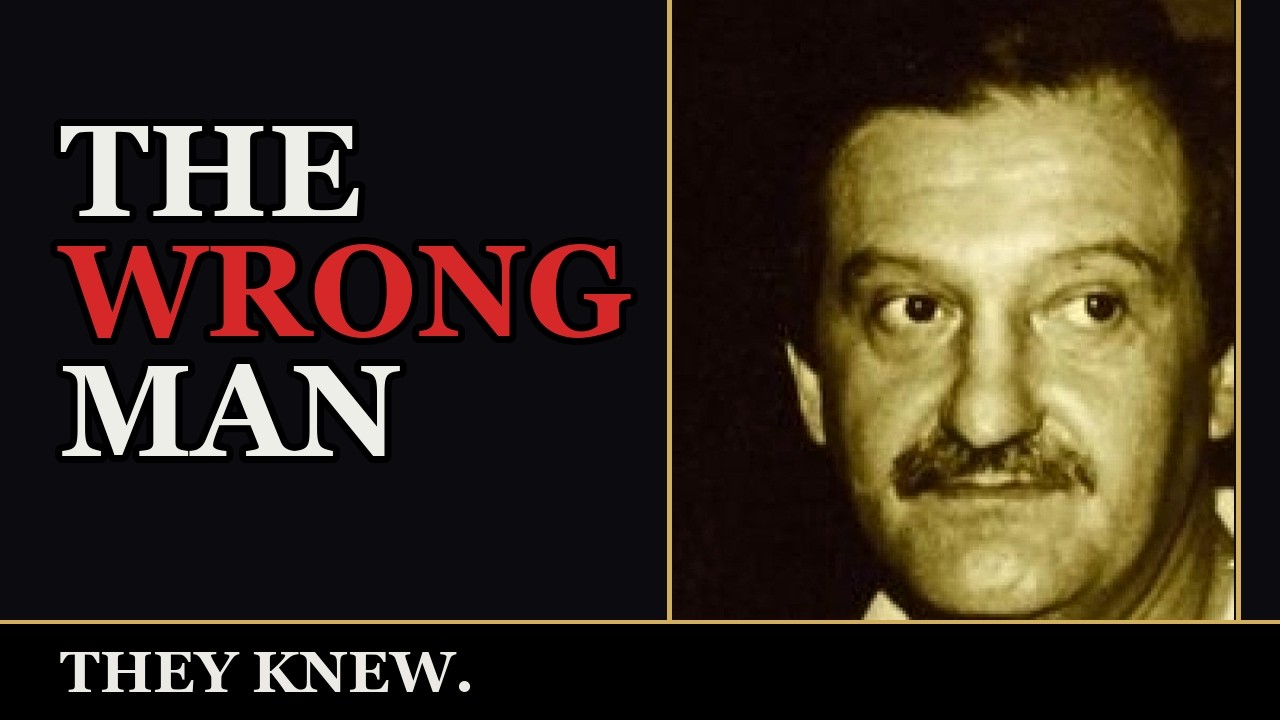
The Vampire of Bucharest, the terror of a city of more than a million people, was a twenty-four-year-old student who had failed the same year of school twice. His professors remembered someone withdrawn and slow, with a thin vocabulary and almost no interests. His classmates remembered someone they had instinctively avoided, without ever being able to say why.
Related documentsDuring his son's investigation Florea Rîmaru had been pulled in and released; under Romanian law, a father could not be made to testify against his own child.
Florea Rîmaru drove a tram through the Bucharest night. He was, by every account anyone gave at the time, an ordinary man. A poor husband, a distant father, and nothing more than that.
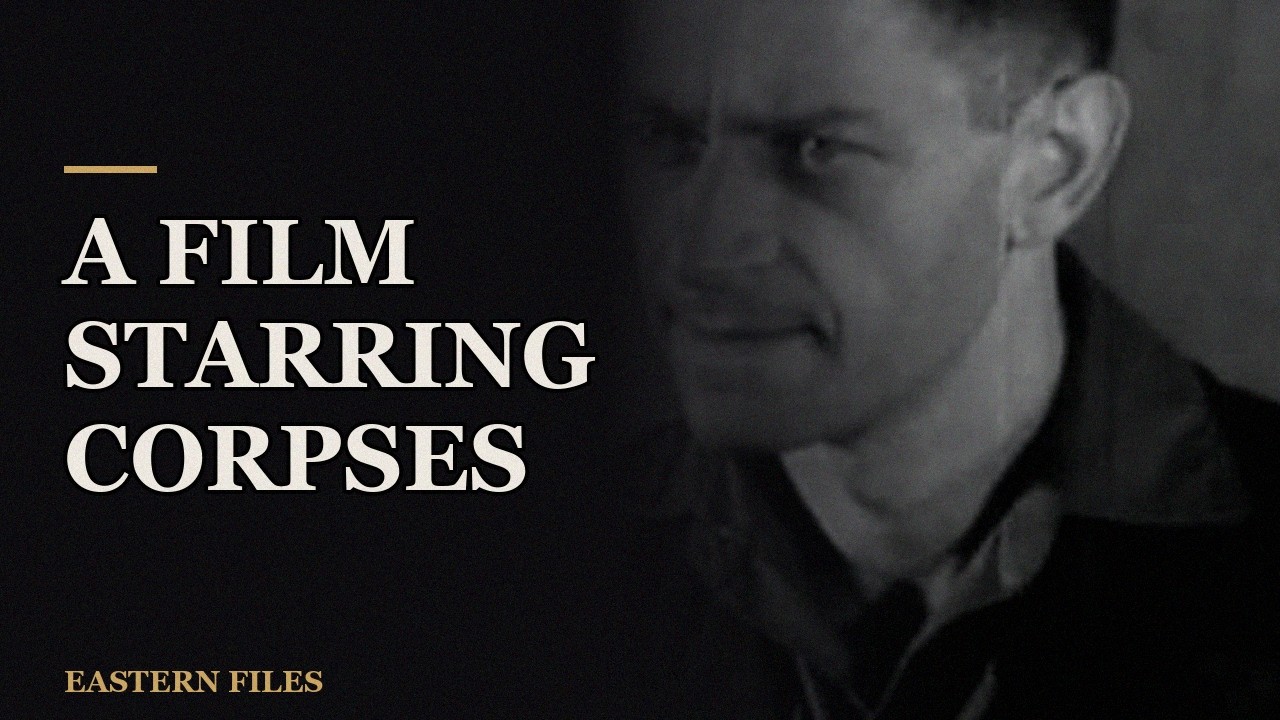
Related documentsAt his trial in the autumn of 1971 he confessed. A plea of insanity was raised, and rejected. When the death sentence was read aloud, the courtroom is said to have broken into applause.
By day he sat in lectures he could not pass. By night, on the worst nights only, he became the thing the entire city had been dreaming about.
Related documentsHe was taken to Jilava prison, and on the twenty-third of October he was led out before a firing squad. He did not go quietly. He fought, and had to be dragged to the post.
And the last words anyone wrote down from the man who had shown his victims nothing were a plea for himself. Vreau să trăiesc. I want to live.
Related documentsIn October of 1972, almost to the day after the firing squad, Florea Rîmaru fell from a moving train and died. Officially, it was an accident.
When the son was executed, the father buried him, and went on with his small grey life. For about a year.
Related documentsFlorea Rîmaru's body was carried to the forensic institute in Bucharest, and there, by a coincidence that still feels too clean to be true, it passed under the eye of a criminologist named Constantin Țurai.
A man who had spent a lifetime with fingerprints. And who had carried, for nearly thirty years, one set he had never been able to name.
When Țurai pressed the dead tram driver's fingers to that twenty-eight-year-old record, they matched. Florea Rîmaru, the investigators concluded, had murdered four women in 1944, in very nearly the same way his son would murder four women in 1970.
The father had never been suspected. Never charged. He had lived out a quiet life and raised a family. And, the evidence now said, he had done it first.
Related documents
Key locations
Full mapDocuments and evidence
Sources
- Documentary
Trial footage, 1971 1971.
Trial footage (1971) and case photographs: Romanian Television and Romanian press archives, used for commentary.
- Archive
Romanian press archives
The case photographs the episode used for commentary: the Militia case presentation board, the mugshots, and the only verified photograph of the father.
- Archive
Archival photographs are public domain (Wikimedia Commons) or used for commentary and criticism.
- Archive
Willy Pragher collection, Landesarchiv Baden-Württemberg
1940s Bucharest: Willy Pragher, Landesarchiv Baden-Württemberg (CC BY 4.0).
- Archive
German Federal Archives (Bundesarchiv), Bild 183-30333-0003
Bundesarchiv, Bild 183-30333-0003 (CC BY-SA 3.0 DE).
- Archive
Fortepan (CC BY-SA 3.0).
What remains unresolved
- Born or Made?
- Whether the boy knew.
- Whether something was taught, or something was inherited, or whether something in that family simply surfaced again across a generation, like a fault line waking under a city.
- At the end, Ion claimed his father had made him what he was. His father, while he lived, denied it flatly.